




What's Happening?
Taiwan's Legislative Yuan has passed the Act on Strengthening Defense Autonomy and Developing the Unmanned Vehicles Industry, an opposition-led bill that allocates NT$240 billion (US$7.59 billion) over six years for unmanned systems procurement and domestic
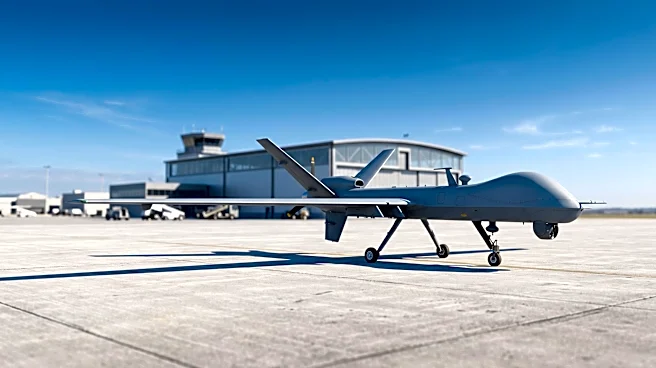
drone industry development. This bill, championed by the Chinese Nationalist Party (KMT) and Taiwan People’s Party (TPP), passed despite the Executive Yuan's earlier proposal for a NT$210 billion special budget. The Executive Yuan, while expressing regret over the rejection of its own plan, has indicated its intention to co-sign the opposition-led bill and expedite the allocation of necessary funding. This funding will be included in this year’s supplemental budget, ensuring that the defense buildup, particularly for uncrewed vehicles, proceeds without delay. The act directs the Ministry of National Defense to prioritize 'low-cost, high-performance' domestically produced uncrewed systems.
Why It's Important?
This legislative development is crucial for Taiwan's national security, as it solidifies a long-term financial commitment to enhancing its defense capabilities through advanced unmanned vehicle technology. The bipartisan support, despite initial disagreements on the funding mechanism, underscores a unified national resolve to strengthen defense autonomy in the face of rising regional threats. By prioritizing domestically produced systems, Taiwan aims to reduce reliance on foreign arms and foster its own defense industry, creating economic opportunities and technological self-sufficiency. The expedited funding through the supplemental budget highlights the urgency perceived by the government in modernizing its military, particularly given the lessons learned from recent global conflicts regarding the importance of uncrewed systems in modern warfare. This strategic investment is vital for maintaining stability in the Indo-Pacific region.
What's Next?
Premier Cho Jung-tai is expected to make a final decision on the amount of the supplemental budget after receiving a report from the Ministry of National Defense this week. The Executive Yuan plans to co-sign the bill and will expedite the allocation of necessary funding, ensuring that the defense buildup, particularly for uncrewed vehicles, proceeds without delay. The funding for uncrewed vehicles, initially planned through a special budget, will now be included in this year's supplemental budget. Amendments to the central government budget are anticipated to be submitted at an appropriate time for legislative review, as there was insufficient time to revise next year's budget proposal before its submission. This approach aims to prevent delays in securing additional funding for the critical defense program.
Beyond the Headlines
The passage of this bill, despite being opposition-led, and the Executive Yuan's subsequent commitment to support and fund it, demonstrates a significant level of political pragmatism and national unity in Taiwan regarding defense matters. This consensus is particularly noteworthy given the often contentious nature of legislative processes. It signals that national security is a paramount concern that can bridge political divides. The focus on 'low-cost, high-performance' uncrewed systems also indicates a strategic adaptation to contemporary warfare, moving towards more agile and cost-effective defense solutions. This could set a precedent for other nations looking to enhance their defense capabilities without solely relying on expensive traditional military hardware, fostering a new era of defense innovation and industrial growth.