


What's Happening?
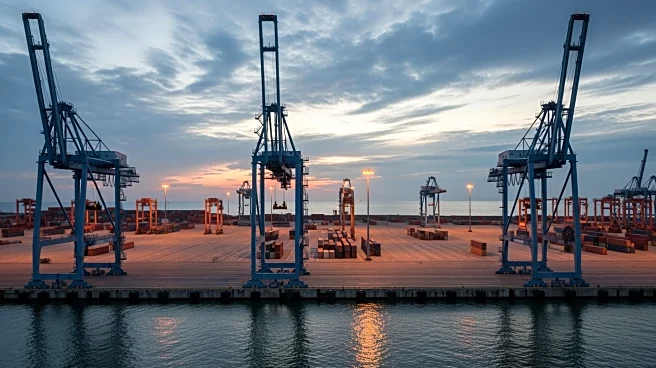
The Port of Los Angeles, the busiest port in the United States, is experiencing a significant decline in cargo volume, attributed to ongoing trade tensions between the U.S. and China. In January, the port processed approximately 812,000 twenty-foot equivalent
units (TEUs), marking a 12% decrease from the previous year. This decline is largely due to a drop in agricultural exports, particularly soybeans, which have seen an 80% reduction in shipments to China. The port's executive director, Gene Seroka, highlighted the failure of China to fulfill commitments to purchase more U.S. agricultural products, as agreed upon in a trade deal between President Trump and Chinese President Xi Jinping. The port's export figures reflect a broader trend of reduced containerized exports to China, which fell by 26% last year.
Why It's Important?
The decline in exports at the Port of Los Angeles underscores the broader impact of U.S.-China trade tensions on American agriculture and trade. The reduction in soybean exports, a key agricultural product, affects U.S. farmers and the agricultural sector, which rely heavily on Chinese markets. The ongoing trade policy uncertainties and tariffs have disrupted traditional trade flows, leading to economic challenges for exporters. Additionally, the shift in soybean contracts to countries like Argentina and Brazil indicates a potential long-term shift in global trade dynamics, which could further disadvantage U.S. exporters. The port's performance is a critical indicator of the health of U.S. trade and its ability to compete in international markets.
What's Next?
Looking ahead, the U.S. agricultural sector may need to explore new markets and strategies to mitigate the impact of reduced exports to China. The port's management and stakeholders will likely continue to monitor trade policy developments and seek ways to adapt to the changing trade landscape. The potential for future trade agreements or policy changes could influence the port's operations and the broader U.S. export market. Additionally, the U.S. government may need to consider measures to support affected industries and ensure the competitiveness of American exports in the global market.