






What's Happening?
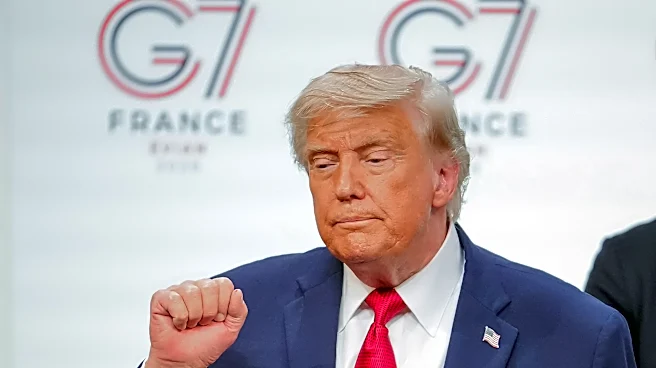
A recent national survey conducted by the Public Religion Research Institute (PRRI) reveals that Pope Leo XIV is viewed more favorably than President Donald Trump across most religious and political groups in the United States. The survey, conducted in May
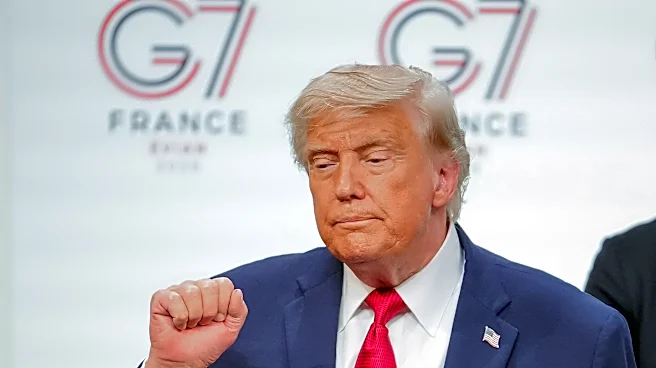
2026, found that 56% of Americans view the pope favorably, compared to 34% for Trump. The data highlights a significant divide, with Republicans being the only group where Trump is more favored than the pope, with 79% viewing Trump favorably versus 47% for Leo. The survey indicates that Trump's favorability has declined across every major religious group, with white evangelical Protestants being the only group where a majority still supports him. The decline is attributed to economic concerns, foreign policy tensions, and immigration debates, while the pope is seen as a moral leader rather than a political figure.
Why It's Important?
The findings underscore the growing polarization in American society, where religious figures are increasingly viewed through a political lens. The survey suggests a realignment in how religious and political identities intersect, with Trump's support narrowing to specific groups like white evangelical Protestants and Christian nationalists. This shift reflects broader societal trends where political identity often outweighs religious affiliation. The pope's broader appeal, seen as a moral authority, contrasts with Trump's political role, highlighting the different standards by which they are judged. This polarization could influence future political and social dynamics, affecting how religious and political leaders are perceived and supported.
What's Next?
The survey results may prompt further analysis and discussion among political and religious leaders about the implications of these findings. As Trump's favorability continues to decline, particularly among independents and less committed Republicans, there may be efforts to address the economic and policy concerns contributing to this trend. Meanwhile, the pope's continued favorability could lead to increased influence in moral and ethical discussions within the U.S. The White House may also respond by emphasizing Trump's past electoral success as a measure of public support, while religious groups may reassess their alignment with political figures.
Beyond the Headlines
The survey highlights deeper cultural and historical dynamics, such as the lingering suspicion toward the Catholic Church among some Protestant groups, which may still resonate with certain segments of the population. The findings also reflect a broader trend of political polarization affecting perceptions of religious figures, suggesting a shift in how moral and spiritual authority is viewed in the context of contemporary American politics. This could have long-term implications for the role of religious leaders in public life and the intersection of faith and politics.