
What's Happening?
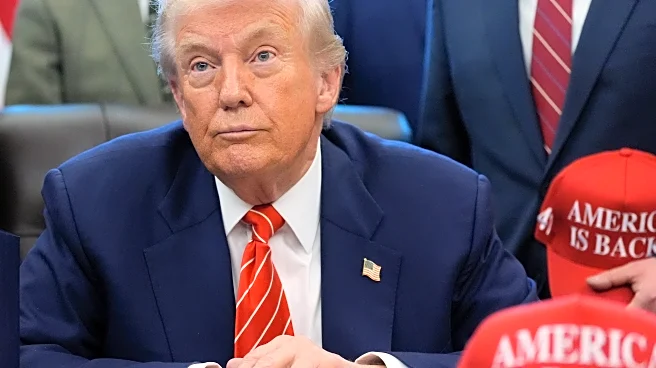
The Trump administration has set a deadline for the Smithsonian Institution to submit materials related to a review of its programming and decision-making processes. This review, initiated by President Trump, targets eight of the Smithsonian's 21 museums,
including the National Museum of American History and the National Museum of African American History and Culture. The administration's directive aims to align the Smithsonian's activities with a presidential order to celebrate American exceptionalism and remove divisive narratives. The Smithsonian's federal funding, which constitutes 62% of its budget, is at stake, as compliance with the review is implied to be linked to future funding. The review has sparked concerns about the potential impact on the Smithsonian's independence and programming.
Why It's Important?
The pressure from the Trump administration on the Smithsonian Institution highlights the ongoing tension between federal oversight and the autonomy of cultural institutions. The Smithsonian's reliance on federal funding makes it vulnerable to political influence, which could affect its programming and exhibitions. This situation underscores the broader debate about the role of government in cultural and educational institutions and the potential consequences of political directives on historical narratives. The outcome of this review could set a precedent for how cultural institutions navigate political pressures while maintaining their mission to educate and inform the public.
What's Next?
The Smithsonian must comply with the administration's request by January 13, 2026. The institution's board of regents, which is undergoing significant changes, will play a crucial role in navigating this challenge. New appointments to the board require congressional and presidential approval, adding another layer of complexity. The Smithsonian's response to the review and its ability to maintain its independence will be closely watched by other cultural institutions and stakeholders. The situation may prompt discussions about the need for policies that protect cultural institutions from political interference.