



What's Happening?
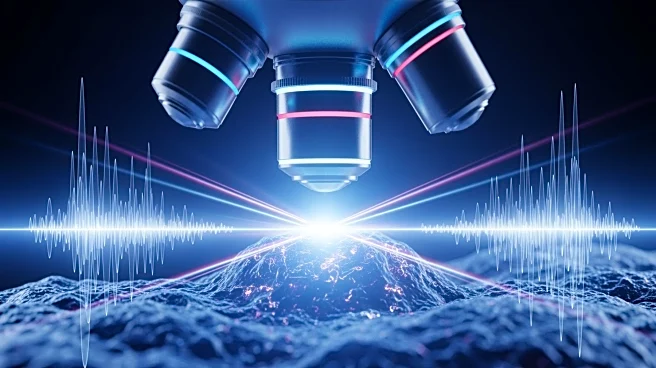
A new system combining Optical Coherence Microscopy (OCM) and Photoacoustic Microscopy (PAM), enhanced with AI-assisted analysis, has been developed for imaging cancer organoids and spheroids. This non-invasive, label-free technology allows for high-speed,
high-throughput imaging, enabling detailed longitudinal studies of cancer organoids under chemotherapeutic treatment. The system can track individual organoids over time, providing insights into growth kinetics and drug response. The AI component facilitates automatic segmentation and tracking, offering a comprehensive analysis of volumetric changes and viability of organoids. This technology is poised to significantly impact drug development by providing a deeper understanding of drug resistance mechanisms and aiding in the development of more effective therapies.
Why It's Important?
The development of this AI-enhanced imaging system is crucial for advancing cancer research and drug development. By enabling detailed tracking of individual organoids, researchers can gain insights into the efficacy of cancer treatments and the mechanisms of drug resistance. This could lead to the development of more targeted and effective therapies, potentially improving patient outcomes. The ability to detect rare cells that survive treatment could also inform the creation of combination therapies that target both the bulk tumor population and resistant cells. This technology represents a significant step forward in personalized medicine, offering the potential to tailor treatments to individual patients based on the specific characteristics of their cancer.
What's Next?
Future work will focus on integrating additional modalities and labels to enhance the system's sensitivity and reduce ambiguity in data analysis. Researchers plan to expand the system's applicability to larger organoids and improve its imaging depth. The development of reflection mode PAM and the use of biofunctionalized contrast agents are also being considered to enhance the system's capabilities. These advancements could further solidify the system's role in cancer research, providing a powerful tool for studying drug-resistant mechanisms and guiding the development of new therapies.
Beyond the Headlines
The integration of AI with OCM and PAM not only enhances imaging capabilities but also represents a broader trend towards the use of artificial intelligence in medical research. This approach could revolutionize how researchers study complex biological systems, offering new ways to analyze and interpret data. The system's ability to provide detailed insights into the behavior of cancer cells under treatment could lead to breakthroughs in understanding cancer biology and developing new therapeutic strategies. As AI continues to evolve, its application in medical imaging and research is likely to expand, offering new possibilities for innovation in healthcare.