









What's Happening?
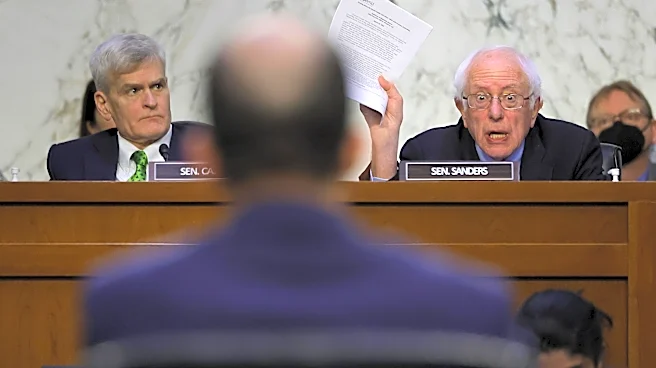
Bernie Sanders has introduced a proposal requiring AI companies like OpenAI, Anthropic, and xAI to transfer 50% of their equity to the U.S. government. This equity would be placed in a sovereign wealth fund aimed at distributing wealth generated by AI to the American
public and funding public programs. Sanders draws inspiration from Norway's sovereign wealth fund, which has grown significantly since its inception. The proposal, known as the American A.I. Sovereign Wealth Fund Act, would grant the government voting rights and board representation in these companies, allowing it to influence their operations and decisions. This initiative is part of a broader discussion on 'universal basic capital,' a concept aimed at ensuring that the economic benefits of AI are shared more equitably across society.
Why It's Important?
The proposal is significant as it addresses the potential for AI to exacerbate economic inequality by concentrating wealth among a few tech companies and their investors. By giving the government a stake in AI companies, the plan aims to redistribute wealth and provide the public with a say in how AI technologies are developed and deployed. This could prevent a scenario where AI advancements benefit only a small elite while displacing large numbers of workers. The proposal also highlights a rare moment of bipartisan interest, with figures across the political spectrum, including President Trump, expressing support for similar ideas. However, there are concerns about government overreach and the potential for regulatory capture, where the government might prioritize the financial success of these companies over public interest.
What's Next?
The proposal's future depends on political negotiations and the willingness of AI companies to comply. While some AI leaders, like OpenAI's Sam Altman, have shown openness to the idea, the specifics, such as the percentage of equity to be transferred, remain contentious. The proposal could face opposition from those wary of increased government control over private enterprises. If implemented, it could set a precedent for how emerging technologies are regulated and integrated into the economy. The outcome will likely influence future discussions on AI regulation and wealth distribution.
Beyond the Headlines
The proposal raises ethical and governance questions about the role of government in private industry and the balance of power between Washington and Silicon Valley. It also reflects broader societal concerns about technological disruption and the need for new economic models to address the challenges posed by AI. The idea of a sovereign wealth fund managed by an independent commission is intended to mitigate political influence, but skepticism remains about its feasibility in the current political climate. The proposal could reshape the relationship between the government and the tech industry, potentially leading to new forms of public-private partnerships.