





What's Happening?
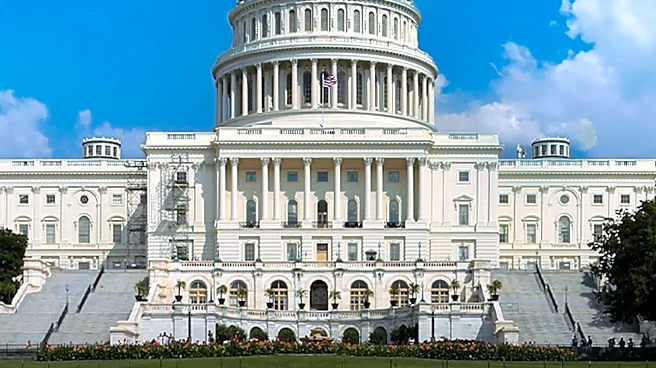
Congressman Marc Veasey (D-TX), alongside Representatives Mike Ezell (MS) and Troy Carter (LA), has co-sponsored the Marine Fisheries Habitat Protection Act (H.R. 5745). This bipartisan legislation aims to conserve valuable marine ecosystems by facilitating
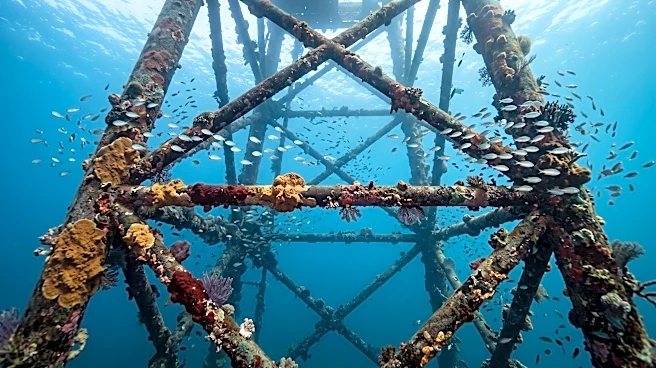
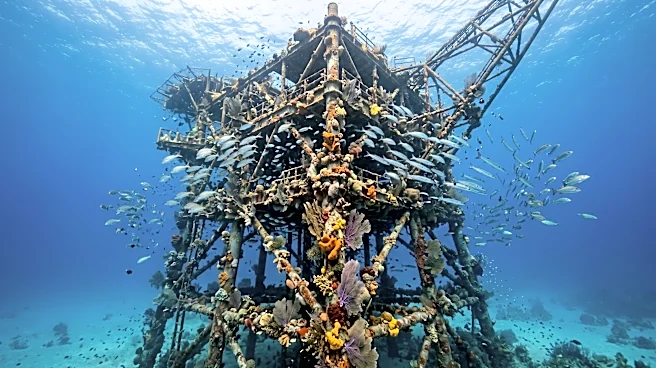
the conversion of eligible offshore oil and gas platforms into permanent artificial reefs. The bill addresses the current issue where lengthy permitting processes and requirements to move platforms often lead to the complete removal of structures that support diverse marine life, including fish and corals. The proposed act seeks to establish a more practical, science-based approach to preserve these habitats, which are crucial for recreational and commercial fisheries and contribute significantly to coastal economies. The House Committee on Natural Resources has advanced this bill, indicating progress in its legislative journey.
Why It's Important?
The Marine Fisheries Habitat Protection Act is important for several reasons. Firstly, it directly addresses the environmental concern of habitat loss in marine environments, particularly in the Gulf of Mexico, where offshore platforms have inadvertently created thriving reef ecosystems over decades. Preserving these artificial reefs is vital for biodiversity and the health of marine populations. Secondly, the bill has significant economic implications for the U.S. recreational fishing industry and coastal communities. These platforms are popular fishing and diving destinations, supporting local businesses and tourism. The current removal process is costly and destroys established habitats that are expensive to replace. By streamlining the conversion to artificial reefs, the legislation aims to sustain these economic benefits. Lastly, the bipartisan nature of the bill, with support from both Democratic and Republican representatives, highlights a shared commitment to conservation and economic development, demonstrating that environmental protection and economic interests can align.
What's Next?
Following its advancement by the House Committee on Natural Resources, the Marine Fisheries Habitat Protection Act (H.R. 5745) will now proceed to the full House of Representatives for consideration. The recreational fishing community and conservation organizations are urging the House to take up the bill. If passed by the House, it would then move to the Senate for further review and potential approval before it could be signed into law. The implementation of the act would involve establishing science-based assessments to identify suitable structures for conversion and ensuring that all environmental and safety requirements, such as plugging and abandoning wells, are met. Stakeholders, including state artificial reef programs, would play a crucial role in managing these newly designated reef sites, ensuring their long-term preservation and benefit to marine life and human activities.
Beyond the Headlines
Beyond its immediate impact on marine conservation and fishing, the Marine Fisheries Habitat Protection Act touches upon broader themes of sustainable resource management and the repurposing of industrial infrastructure. The bill acknowledges that structures initially built for resource extraction can evolve into valuable ecological assets. This approach could set a precedent for how other aging industrial facilities, both offshore and onshore, might be repurposed for environmental benefit rather than simply dismantled. It also highlights the complex interplay between industry, environment, and recreation, demonstrating how policy can mediate these relationships to achieve mutually beneficial outcomes. The bipartisan support for this initiative underscores a growing recognition that environmental stewardship can be a common ground for political cooperation, especially when economic benefits are clearly articulated and shared among diverse stakeholders.