






What's Happening?
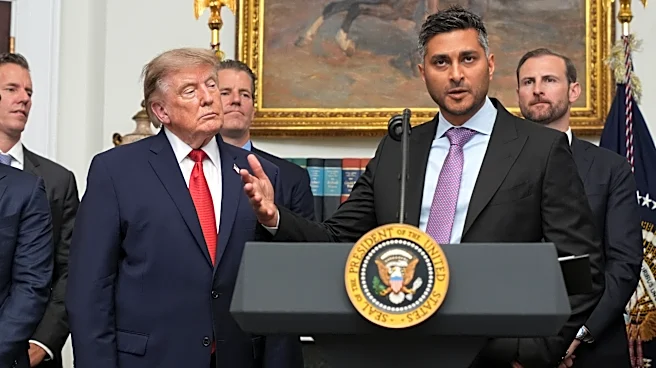
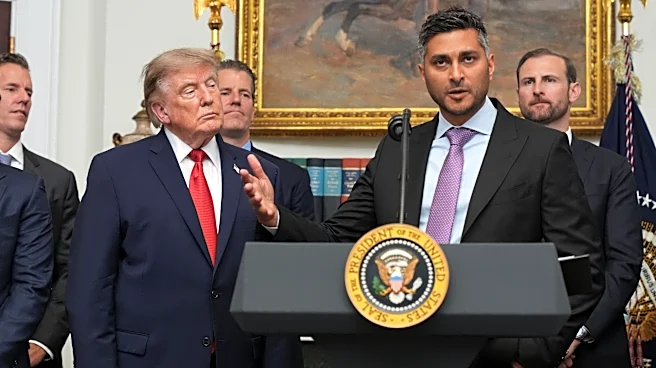
Republicans in the Senate have indicated that President Trump has agreed to new ethics provisions to facilitate the passage of a sweeping cryptocurrency bill. These provisions would apply to him and his wife, First Lady Melania Trump, and aim to address
concerns about potential conflicts of interest given President Trump's significant crypto holdings and ventures. Initially, President Trump agreed to a measure barring him and his wife from issuing meme coins. Subsequently, he reportedly consented to a tougher ethics proposal requiring him to place his crypto holdings in a blind trust and divest them if they reach a certain value. A critical provision for Democrats, which President Trump also agreed to, allows state attorneys general to enforce the law alongside the Justice Department.
Why It's Important?
This development marks a significant moment for the $2.3 trillion cryptocurrency market and U.S. political ethics. If passed, the bill would establish a new regulatory framework for digital assets, potentially cementing their legitimacy in law. More importantly, President Trump's agreement to ethics rules, which historically have not always applied to presidents, could set a new precedent for presidential financial transparency and conflict-of-interest standards, especially concerning emerging asset classes. The inclusion of state attorneys general in enforcement is crucial for Democrats, who seek independent oversight, and reflects a compromise that could bridge partisan divides on this legislation. The outcome will influence how future political figures engage with and profit from new financial technologies.
What's Next?
A pivotal Senate vote on the cryptocurrency bill is scheduled, with its passage largely dependent on whether President Trump's concessions on ethics are deemed sufficient by key senators, particularly Democrats. The bill's fate will determine whether Washington establishes clear legal guidelines for the crypto industry or if the well-funded industry will intensify its lobbying efforts in future elections. If the bill passes, it will introduce new compliance requirements for the crypto market and impose stricter ethical obligations on federally elected officials regarding their digital asset investments. The enforcement mechanisms, particularly involving state attorneys general, will be closely watched for their effectiveness and potential political implications.
Beyond the Headlines
President Trump's shift from skepticism to embracing cryptocurrency, influenced by his sons' interests and its appeal to certain voter demographics, highlights the increasing politicization and mainstreaming of digital assets. This situation underscores the evolving challenges of applying traditional ethics rules to new forms of wealth and financial technology. The debate also touches upon the broader issue of presidential conflicts of interest, especially when a president maintains active business ventures while in office. The willingness to negotiate on ethics provisions for a legislative win suggests a pragmatic approach to policy-making, but also raises questions about the extent to which personal financial interests can shape legislative priorities and outcomes in the U.S. political system.