


What's Happening?
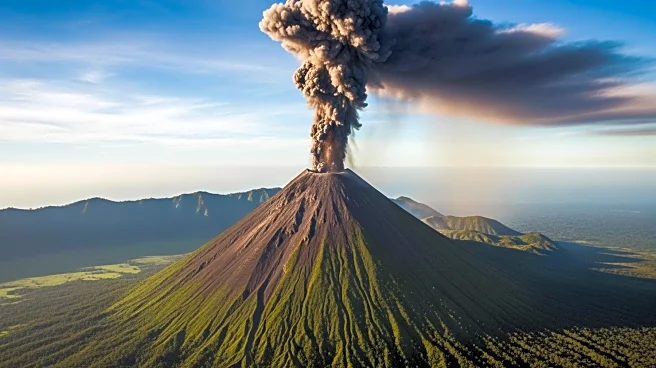
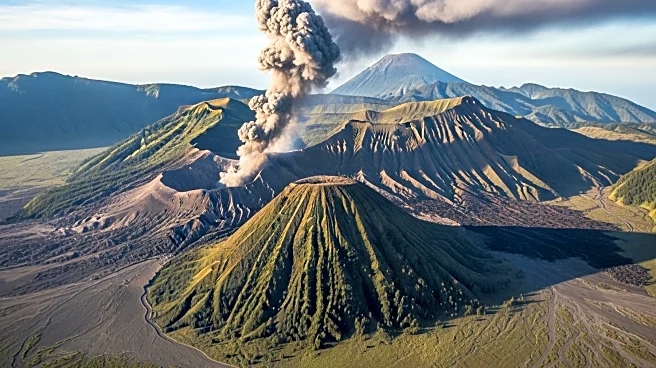
The National Aeronautics and Space Administration (NASA) is closely monitoring the ongoing eruption of Mayon Volcano in the Philippines, which began in January 2026. The Philippine Institute of Volcanology and Seismology (PHIVOLCS) raised the alert level
to three on a five-level scale after observing increased volcanic activity, including lava flows and pyroclastic density currents. The eruption has led to evacuations within a 6-kilometer radius, affecting communities such as Tabaco City, Malilpot, and Camalig. NASA's Operational Land Imager on Landsat 8 captured images of the volcano, highlighting the heat signature of the lava. The eruption has been marked by significant sulfur dioxide emissions, with a peak of 7,633 metric tons recorded on March 6, 2026, the highest in 15 years.
Why It's Important?
The eruption of Mayon Volcano poses significant risks to local communities, necessitating evacuations and highlighting the need for effective disaster management strategies. The high levels of sulfur dioxide emissions are of particular concern due to their potential impact on air quality and climate. NASA's involvement in monitoring the eruption underscores the importance of international collaboration in addressing natural disasters. The data collected by NASA and PHIVOLCS can aid in understanding volcanic activity and improving predictive models, ultimately enhancing public safety and preparedness. The situation also draws attention to the broader implications of volcanic eruptions on global environmental conditions.
What's Next?
Continued monitoring of Mayon Volcano is expected, with PHIVOLCS and NASA likely to provide updates on volcanic activity and emissions. The alert level may be adjusted based on changes in the volcano's behavior. Local authorities will need to manage the ongoing evacuations and ensure the safety of affected residents. The data collected during this eruption could contribute to future research and policy development aimed at mitigating the impacts of volcanic eruptions. Additionally, the international scientific community may use this event as a case study to improve global volcanic monitoring systems.
Beyond the Headlines
The eruption of Mayon Volcano highlights the intersection of natural disasters and human vulnerability. The historical context of past eruptions, which have resulted in significant loss of life, underscores the importance of preparedness and resilience in volcanic regions. The event also raises questions about the long-term environmental impacts of volcanic emissions, particularly in relation to climate change. The role of technology and international cooperation in disaster response is crucial, as demonstrated by NASA's involvement. This situation may prompt discussions on enhancing global frameworks for disaster risk reduction and environmental protection.