


What's Happening?
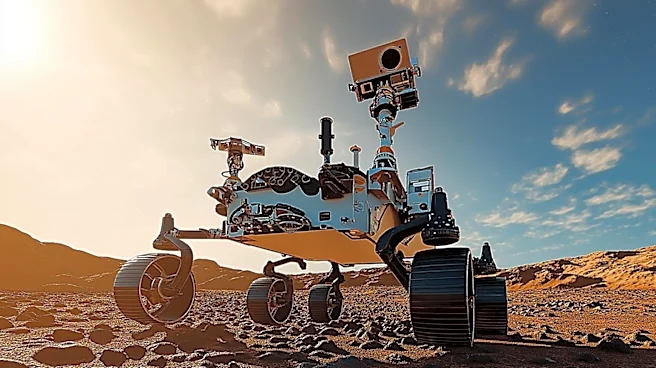
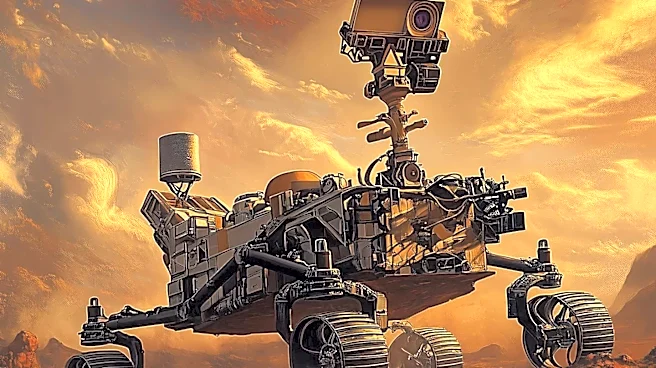
NASA's Curiosity rover has photographed a sand-capped butte, named 'Miraflores,' on Mars. The butte, approximately 20 feet tall, was captured on June 11, 2026, during the rover's 4,923rd Martian day. This geological feature was left as surrounding rock
eroded over time, deepening the valley Curiosity is exploring. The panorama, composed of 11 images, shows the butte amidst a terrain covered with polygonal features. The images were taken by Curiosity's Mast Camera and adjusted to reflect Earth-like lighting conditions.
Why It's Important?
The observation of 'Miraflores' provides valuable data on the erosional processes on Mars. Understanding these processes helps scientists reconstruct the planet's geological history and assess its past habitability. The presence of polygonal features around the butte also offers clues about the environmental conditions that shaped the Martian landscape. These insights are crucial for future exploration missions and for understanding the potential for life on Mars.
What's Next?
Curiosity will continue its mission, climbing Mount Sharp and studying various geological features. The data collected will be analyzed to understand the processes that formed the butte and surrounding polygons. This ongoing research will inform future missions, including those involving human exploration. Scientists will also compare these Martian features with similar formations on Earth to gain a deeper understanding of Mars' geological history.