






What's Happening?
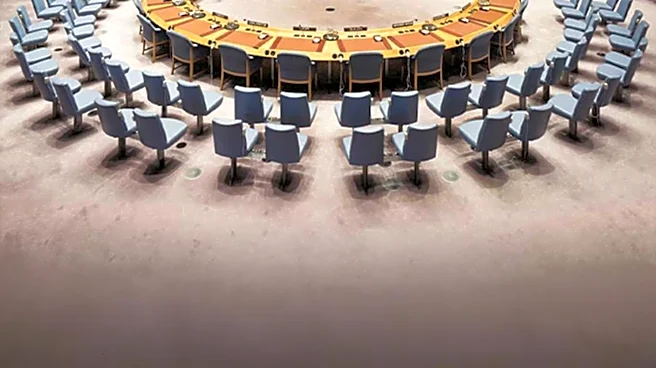
The United Nations Security Council has reached a diplomatic impasse regarding the future of the United Nations Mission for the Referendum in Western Sahara (MINURSO). A recent session concluded without the adoption of a draft resolution concerning MINURSO's
mandate and operations, leaving the mission's path forward uncertain. The deadlock occurred after a draft resolution proposed by the United States failed to achieve consensus, reportedly due to a veto from Russia. Conversely, a counter-proposal introduced by Russia also did not secure sufficient international support among council members. This failure to agree on a resolution highlights the complex geopolitical interests influencing the discourse surrounding the Moroccan Sahara and the administration of the UN mission. MINURSO has been operating in the territory for decades, making its continued status a critical point of international contention. The inability of the Security Council to align on a resolution text underscores the deeply entrenched positions of various stakeholders within the global arena.
Why It's Important?
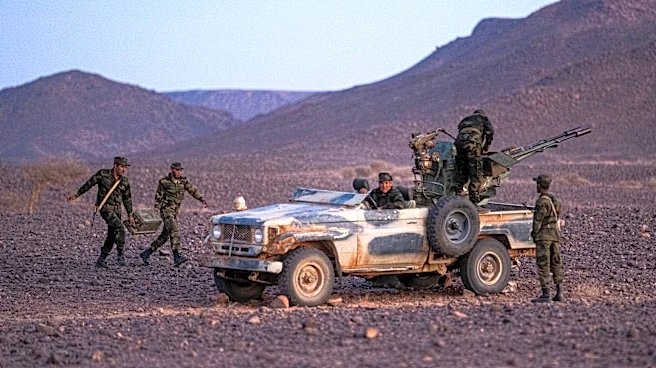
The Security Council's failure to adopt a resolution on MINURSO's mandate has significant implications for the stability and diplomatic efforts in Western Sahara, Africa's longest-running territorial conflict. The region is rich in fisheries and phosphate deposits, with Morocco controlling most of it and the pro-independence Polisario Front claiming the territory. The UN continues to list Western Sahara as a non-self-governing territory awaiting decolonization. The current diplomatic gridlock means that the operational parameters and future framework for MINURSO remain in flux, potentially exacerbating tensions between Morocco and the Polisario Front. The Polisario Front has previously criticized the UN mission's failure to hold a referendum or preserve a ceasefire. The lack of a clear international mandate could undermine ongoing efforts to find a peaceful resolution, affecting regional stability and the prospects for self-determination for the people of Western Sahara. The involvement of major world powers like the U.S. and Russia in the deadlock also underscores the broader geopolitical stakes involved.
What's Next?
With the UN Security Council failing to reach a consensus, the immediate future of MINURSO and the broader diplomatic efforts in Western Sahara remain uncertain. Observers are closely monitoring the next steps for the Security Council, as the lack of an adopted resolution leaves the mission's operational parameters in a state of flux. Further diplomatic efforts will be required to bridge the gaps that prevented an agreement. The coming weeks are expected to be critical as the UN and concerned parties navigate the implications of this legislative setback. Renewed dialogue and eventual compromise at the Security Council level will be necessary to establish a clear path forward for MINURSO's mandate. Without a unified international approach, the long-standing dispute over Western Sahara could face prolonged stagnation, potentially leading to increased regional instability and continued humanitarian concerns for the local population.
Beyond the Headlines
The diplomatic stalemate in the UN Security Council over MINURSO's mandate reflects deeper challenges within international diplomacy, particularly when dealing with long-standing regional disputes where major world powers have competing interests. The inability to pass a resolution highlights the limitations of multilateral institutions in resolving complex territorial conflicts without unanimous support from key members. This situation could set a precedent for other unresolved territorial disputes globally, demonstrating how geopolitical rivalries can impede progress towards peace and self-determination. Furthermore, the ongoing uncertainty surrounding MINURSO's role could embolden parties to the conflict to pursue alternative strategies, potentially leading to a resurgence of tensions or a shift in regional alliances. The ethical implications of leaving a non-self-governing territory without a clear path to decolonization, as mandated by the UN, also come to the forefront, raising questions about the international community's commitment to self-determination principles.