
What's Happening?
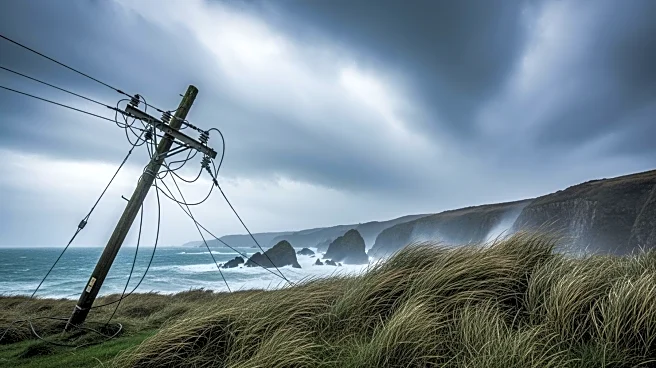
Thousands of homes in Cornwall remain without electricity and water following the devastation caused by Storm Goretti. The storm, described as the worst in living memory, has left about 1,250 properties
without power and approximately 3,000 homes without water. The National Grid and South West Water are working to restore services, with bottled water stations set up for affected residents. The storm has also led to the closure or delayed opening of 31 schools in the region. Local MP Andrew George has criticized the government's response, suggesting that a national emergency would have been declared if the storm had hit London or the home counties. The government, however, states that it is coordinating efforts to restore essential services.
Why It's Important?
The impact of Storm Goretti highlights the vulnerability of infrastructure in rural areas during extreme weather events. The prolonged power and water outages underscore the need for robust emergency response plans and infrastructure resilience. The situation in Cornwall serves as a reminder of the potential consequences of climate change, with more frequent and severe storms expected. The government's response to such crises is crucial, as it affects public confidence and the well-being of affected communities. The storm's aftermath also raises questions about resource allocation and the prioritization of rural areas in national emergency planning.
What's Next?
Efforts to restore power and water are ongoing, with authorities hopeful that most services will be reconnected soon. The government may face increased pressure to improve infrastructure resilience and emergency response strategies. Local communities are likely to push for more support and resources to prevent similar situations in the future. The storm's impact may also prompt discussions on climate adaptation measures and investment in sustainable infrastructure to mitigate the effects of extreme weather events.