
What's Happening?
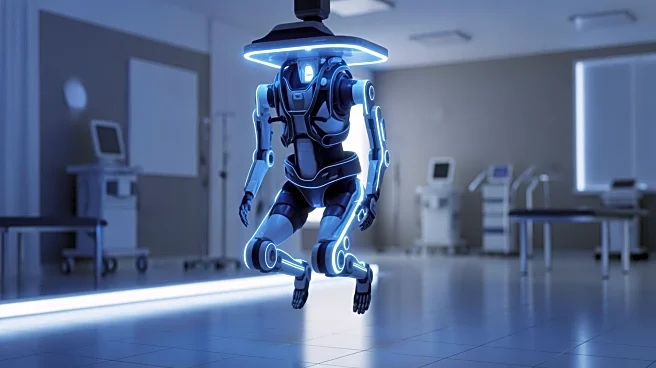
Marshall Hospital has introduced an innovative zero gravity robotic therapy to assist patients with physical and neurological challenges in relearning how to walk. This therapy utilizes ceiling-mounted
harnesses that allow patients to experience weightless movement, providing safe and supported steps. The technology is designed to restore independence and transform the rehabilitation process for individuals who have lost mobility due to various conditions. By simulating a weightless environment, patients can practice walking without the fear of falling, which is crucial for building confidence and improving their physical capabilities.
Why It's Important?
The introduction of zero gravity robotic therapy at Marshall Hospital represents a significant advancement in rehabilitation technology. This approach can potentially revolutionize the way patients recover from mobility impairments, offering a safer and more effective method for regaining walking abilities. The therapy not only aids in physical recovery but also boosts the mental well-being of patients by restoring a sense of independence and confidence. As the population ages and the incidence of mobility-related conditions increases, such innovative therapies could play a crucial role in healthcare, reducing the burden on caregivers and healthcare systems while improving patient outcomes.
What's Next?
As this therapy gains traction, it is likely that more hospitals and rehabilitation centers will adopt similar technologies to enhance their treatment offerings. The success of the program at Marshall Hospital could lead to further research and development in robotic-assisted rehabilitation, potentially expanding its applications to other areas of physical therapy. Stakeholders, including healthcare providers and insurance companies, may need to consider the cost-effectiveness and long-term benefits of such therapies, which could influence policy decisions and funding allocations in the healthcare sector.