






What's Happening?
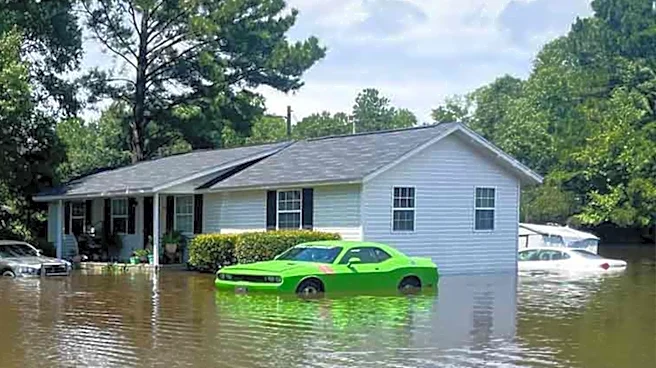
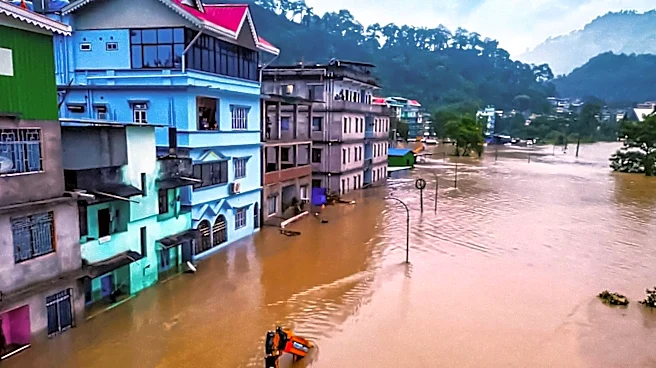
The Federal Emergency Management Agency (FEMA) is facing criticism for its flood maps, which have led to misunderstandings among homeowners about flood risk, resulting in millions lacking necessary flood insurance. In North Carolina, Liz Barker's home was
severely damaged by flooding from Hurricane Helene, yet she did not have flood insurance because her home was not listed in a Special Flood Hazard Area on FEMA's maps. This situation is not unique, as many homeowners across the U.S. are similarly uninsured due to misconceptions about FEMA's flood zone designations. Experts like Susan Crawford, a climate writer, and Ed Kearns, Chief Science Officer at First Street, highlight that FEMA's maps are often seen as binary indicators of risk, which is misleading. FEMA is currently working on revising its maps to incorporate more comprehensive data, including local knowledge and recent mitigation projects, but this process takes at least 18 months.
Why It's Important?
The misunderstanding of FEMA's flood maps has significant implications for homeowners and the insurance industry. Without accurate risk assessments, homeowners may forgo necessary flood insurance, leaving them vulnerable to financial ruin in the event of a flood. This issue also affects the National Flood Insurance Program, which relies on accurate risk data to set premiums and manage risk. The lack of insurance coverage can lead to increased reliance on federal disaster aid, which is costly for taxpayers. Moreover, as climate change increases the frequency and severity of storms, the need for accurate flood risk assessments becomes even more critical to protect communities and infrastructure.
What's Next?
FEMA is in the process of updating its flood maps to provide a more comprehensive view of flood risk, which includes modernizing its modeling to extend beyond traditional regulatory boundaries. This update aims to incorporate local data and recent mitigation efforts. However, experts like Susan Crawford argue that these updates still fall short of addressing future risks from climate change and increased development. As FEMA continues its revisions, homeowners and communities will need to stay informed about their flood risk and consider obtaining flood insurance even if not mandated by current maps.