







What's Happening?
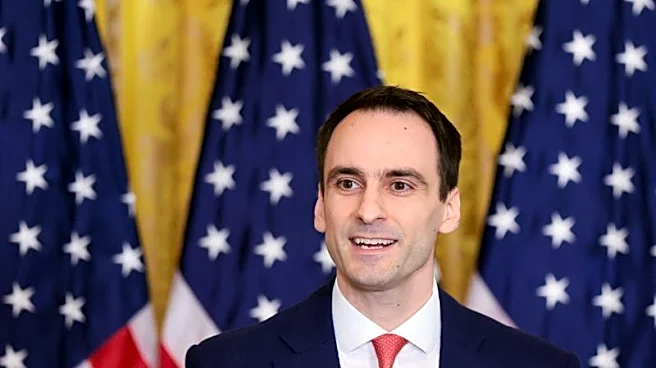
The White House has released a new report outlining a vision to redirect federal research funding away from universities and towards private sector research labs. The report, authored by Michael Kratsios, director of the White House Office of Science
and Technology Policy, suggests that federal agencies should support individual researchers who can choose their research institutions. This approach aims to revive private speculative research labs, which have declined over the years. The report emphasizes the need for large, interdisciplinary teams to tackle complex scientific problems, moving away from the traditional university-based research model. It also proposes multiyear grants to provide researchers with more autonomy and reduce administrative burdens. However, the report does not specify exact funding amounts or call for a complete withdrawal of federal support from universities.
Why It's Important?
This shift in funding strategy could significantly impact the landscape of scientific research in the U.S. By moving funds away from universities, the White House aims to foster innovation in private research labs, potentially leading to breakthroughs in various fields. However, this approach has raised concerns among academic institutions, which fear a reduction in funding for university-based research. Critics argue that this could undermine the traditional model of curiosity-driven research and the training of future scientists. The proposal also comes amid broader debates about the role of federal funding in scientific advancement and the balance between public and private sector contributions.
What's Next?
The implementation of this new funding strategy remains uncertain, as it depends on how federal agencies interpret and apply the report's recommendations. There may be resistance from academic institutions and researchers who rely on federal grants. Additionally, the proposal could face legal challenges, especially if it is perceived as undermining the established partnership between the federal government and universities. The White House's approach will likely be scrutinized in upcoming budget discussions and policy debates.
Beyond the Headlines
The proposed changes could have long-term implications for the U.S. scientific community. By prioritizing high-risk, high-reward research, the White House aims to encourage innovation, but this could also lead to increased competition for limited resources. The emphasis on private sector involvement may shift the focus towards commercially viable projects, potentially sidelining fundamental research that does not have immediate applications. This could alter the trajectory of scientific discovery and innovation in the U.S., affecting everything from technological advancements to national security.