




What's Happening?
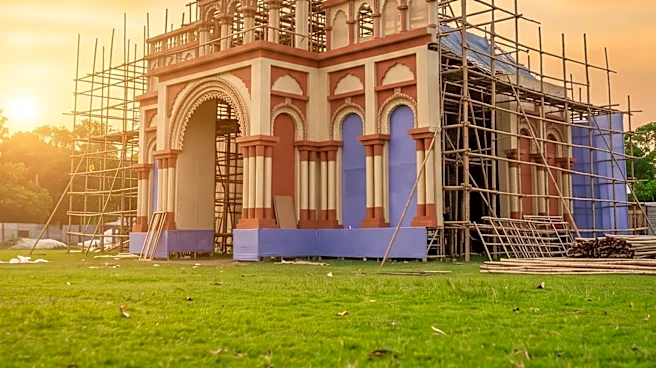
The Germantown Town Hall, a historic landmark in Philadelphia, is finally slated for rehabilitation with a target completion date in the third quarter of 2028. Built in 1923, the Beaux Arts/Classical Revival style building has been vacant since 1998 and has accumulated
numerous violations from the Department of Licenses and Inspections, including an 'unsafe' rating since 2017. Developer Anthony Fullard, CEO of West Powelton Development Company, initially planned a mixed-use property with apartments, offices, and event space. However, the apartment component was later dropped due to financial feasibility. The current plan focuses on securing an anchor tenant for the second and third floors, with smaller units on the first floor and a community kitchen in the basement. Youth Build, a charter school, is a potential tenant, considering the site for administrative offices and workforce training spaces. The property title has now been secured, paving the way for the $13 million project, which will be funded through a combination of debt financing, tax credits, and grants, including $4.4 million from Firstrust Bank, $3 million from the state’s Redevelopment Assistance Capital Program (RACP), $2.6 million from Federal Historic Tax Credits, and $3 million from the New Markets Tax Credit Program (NMTC).
Why It's Important?
The rehabilitation of Germantown Town Hall is a significant development for the Germantown neighborhood, promising to revitalize a long-neglected landmark and potentially stimulate economic growth. The building's vacancy and deterioration have been a source of community concern for decades, and its restoration could serve as a catalyst for further development in the area. The project's focus on a charter school as a potential anchor tenant highlights its potential to provide educational and workforce training opportunities, addressing community needs beyond just physical restoration. The complex financing structure, involving various public and private funding sources, demonstrates the collaborative effort required to undertake such large-scale historic preservation projects. This initiative could also set a precedent for how other historic but neglected properties in Philadelphia are redeveloped, balancing preservation with modern utility and community benefit.
What's Next?
With the property title secured, developer Anthony Fullard and his team will move forward with detailed planning and execution of the rehabilitation project. Securing a definitive agreement with Youth Build or another anchor tenant will be a critical next step, as will finalizing all financing arrangements. The project will involve extensive architectural and construction work to address the building's long-standing structural issues and bring it up to modern standards while preserving its historic character. Community engagement will likely continue as the project progresses, ensuring that the redevelopment aligns with local needs and aspirations. The aim is to complete the project by the third quarter of 2028, at which point Germantown Town Hall will reopen as a functional and vibrant part of the community.
Beyond the Headlines
The Germantown Town Hall project exemplifies the intricate challenges and rewards of urban historic preservation. The decades-long vacancy and deterioration underscore the difficulties in finding viable uses and funding for large, aging structures. The shift in development plans, from apartments to a focus on an anchor tenant like a charter school, reflects the dynamic nature of urban development and the need for flexibility in response to market conditions and community needs. The reliance on various tax credit programs, such as Federal Historic Tax Credits and New Markets Tax Credits, highlights their crucial role in making such projects financially feasible, especially in distressed communities. This project also touches upon broader discussions about equitable development and how historic preservation can contribute to community revitalization, job creation, and educational opportunities, rather than just aesthetic restoration.