







What's Happening?
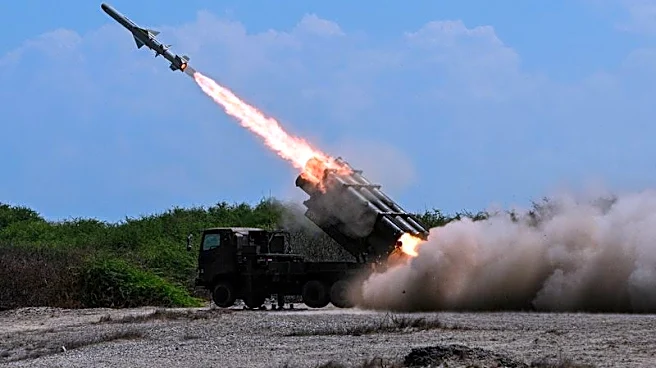
Japanese troops have successfully launched two Type 88 anti-ship missiles during Exercise Balikatan 2026 in the Philippines. The live missile firing took place on May 6 from the Culili Point sand dunes in northwestern Luzon, targeting a decommissioned
ship 75km away in the South China Sea. This exercise marks the first time Japanese combat troops have actively participated in Balikatan, which traditionally involved Australia, the Philippines, and the USA. The event is part of a broader military exercise involving approximately 17,000 troops from seven countries, including first-time participants Canada, France, and New Zealand. The exercise aims to enhance military cooperation and readiness in the region, particularly in response to potential conflicts involving Taiwan.
Why It's Important?
The participation of Japanese forces in the Balikatan exercise signifies a shift in Japan's military engagement in the region, reflecting growing concerns over China's military activities. The exercise underscores the strategic importance of the Luzon Strait, a critical maritime chokepoint. By enhancing military cooperation with regional allies, Japan and its partners aim to deter potential aggression and ensure stability in the Asia-Pacific region. This development could influence regional security dynamics, particularly in light of China's assertive maritime claims and military expansion.
What's Next?
The successful missile drill may lead to further military collaborations and exercises among participating nations, strengthening their collective defense capabilities. Japan's involvement could also prompt discussions on expanding its military role in regional security frameworks. As tensions in the South China Sea persist, the international community will likely monitor China's response to these exercises and any subsequent military maneuvers.