








What's Happening?
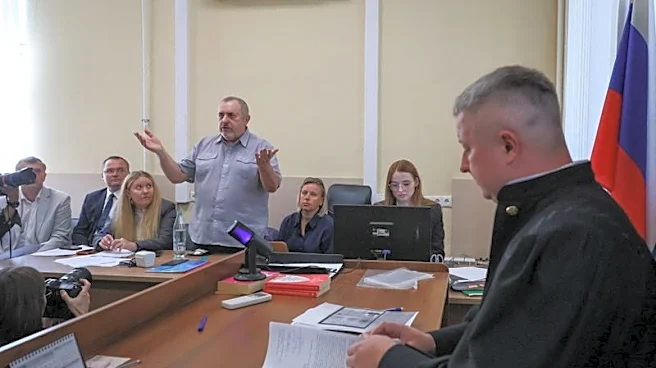
Boris Nadezhdin, a critic of Moscow's military actions in Ukraine and a challenger to President Vladimir Putin in the 2024 election, has been convicted of displaying 'extremist symbols.' This conviction stems from a 2023 online interview where Nadezhdin showed
a picture of the late opposition leader Alexei Navalny. The court in Dolgoprudny, near Moscow, fined Nadezhdin 1,000 rubles, effectively barring him from participating in the upcoming parliamentary elections. Previously, Nadezhdin was labeled a 'foreign agent' by Russia's Justice Ministry, a designation that restricts his ability to hold public office. Despite these challenges, Nadezhdin had been campaigning for a parliamentary seat until the recent verdict. His conviction is part of a broader crackdown on dissent in Russia, which has intensified since the Kremlin's military intervention in Ukraine in 2022.
Why It's Important?
The conviction of Boris Nadezhdin highlights the ongoing suppression of political dissent in Russia, particularly against those opposing the Kremlin's policies. This case underscores the challenges faced by opposition figures in Russia, where legal and administrative measures are frequently used to stifle political competition. The broader implications for U.S. interests include the potential for increased tensions between Russia and Western nations, as the suppression of dissent and free speech in Russia often draws international condemnation. Additionally, the situation may impact U.S. foreign policy and diplomatic relations with Russia, as the U.S. has historically advocated for democratic processes and human rights globally.
What's Next?
Following his conviction, Boris Nadezhdin may consider seeking asylum abroad, although he is currently barred from leaving Russia. The international community, including the U.S., may respond with statements condemning the suppression of political opposition in Russia. This could lead to further diplomatic strains and potential sanctions. Domestically, the Russian government is likely to continue its crackdown on dissent, particularly as it approaches future elections. The situation may also prompt increased scrutiny and criticism from human rights organizations and international bodies.
Beyond the Headlines
The case of Boris Nadezhdin reflects a broader trend of diminishing political freedoms in Russia, which could have long-term implications for civil society and governance in the country. The use of legal mechanisms to silence opposition figures raises ethical concerns about the rule of law and democratic principles in Russia. This environment may discourage political participation and activism, leading to a more controlled and less pluralistic political landscape. The international community's response to such developments could influence global perceptions of Russia and its leadership.