
What's Happening?
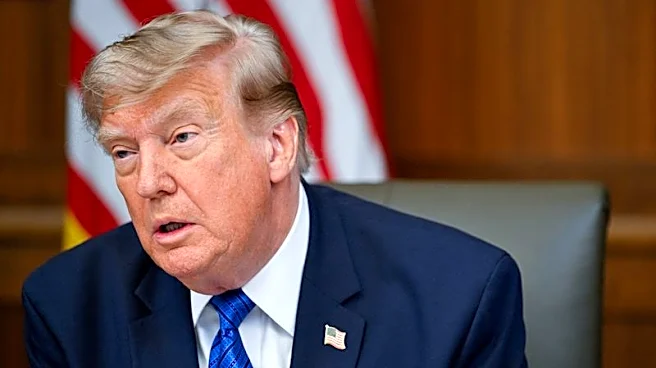
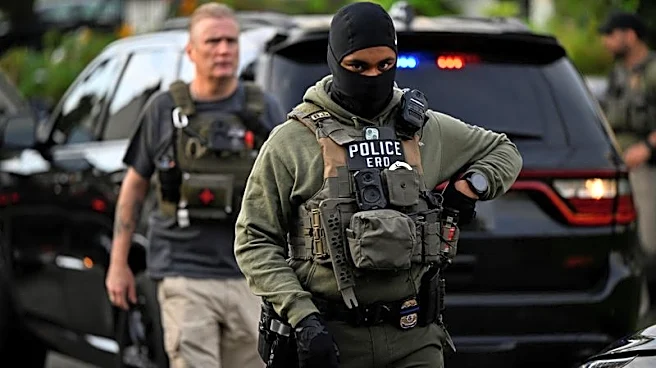
President Trump has asserted that National Guard deployments were effective in suppressing crime in Washington D.C., claiming the city transformed from a 'hellhole' to one of the safest. This statement
was made on the day the FBI crime report was released, which indicated a national decline in every major violent crime category, marking the largest year-to-year decline since the 1930s. However, studies have found no association between crime drops in D.C. and the National Guard's presence. A Reuters investigation could not locate any records of guard members assisting local police in the neighborhoods most affected by murders in D.C. The national crime decline is widespread across the U.S., with various cities reporting significant reductions in violent crime. Experts attribute these declines to multiple factors, including a return to normal after a spike in 2020-2021, increased government funding through initiatives like the American Rescue Plan Act, and the implementation of evidence-based policing strategies.
Why It's Important?
The differing narratives surrounding the decline in crime, particularly President Trump's claims versus independent studies, highlight a significant political and public perception challenge. While crime rates are indeed falling nationally, the attribution of this success has become a contentious issue, especially with upcoming midterm elections. The lack of evidence supporting the National Guard's role in D.C.'s crime reduction, as claimed by President Trump, underscores the potential for political figures to misrepresent data for electoral advantage. This can mislead the public about effective crime prevention strategies and divert attention from proven methods. The broader national trend of declining crime is crucial for public safety and economic stability, but the politicization of its causes can hinder bipartisan efforts to sustain and improve these positive trends. It also impacts public trust in official statements regarding law enforcement and national security.
What's Next?
As midterm elections approach, the debate over the causes of declining crime rates is expected to intensify. Political candidates and parties will likely continue to claim credit for the positive trends, using them to bolster their campaigns and criticize opponents. This will involve highlighting specific policies or actions they believe contributed to the decline, such as investments in law enforcement, community programs, or tougher bail laws. The ongoing scrutiny of claims, like President Trump's regarding the National Guard, will likely continue from media and independent researchers. The focus will remain on understanding the true drivers behind the crime reduction to inform future policy decisions. This political discourse will shape public opinion and potentially influence voter behavior, impacting the composition of legislative bodies and future approaches to criminal justice reform and public safety initiatives.
Beyond the Headlines
The debate over crime statistics and their causes reveals a deeper societal issue: the politicization of public safety. Crime rates, regardless of their actual trajectory, often become a potent tool in political campaigns, influencing voter sentiment more than objective data. This can lead to a disconnect between public perception and reality, where fear of crime might persist even as rates decline. The tendency to attribute complex social phenomena like crime reduction to singular, often politically convenient, causes overlooks the multifaceted nature of such issues. It also highlights the challenge of evidence-based policymaking in a highly polarized environment. The long-term implication is that effective, nuanced solutions to crime may be overshadowed by simplistic political narratives, potentially hindering progress in criminal justice reform and community development.