



What's Happening?
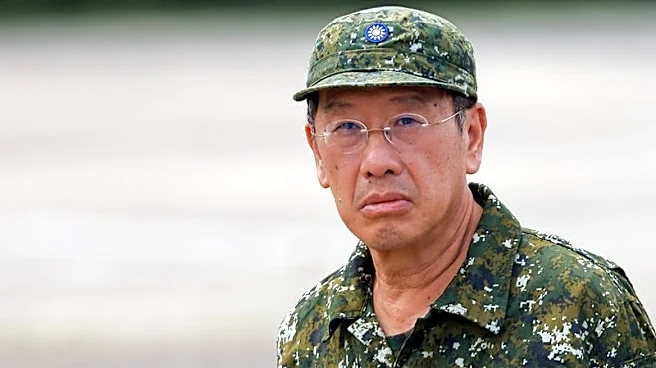
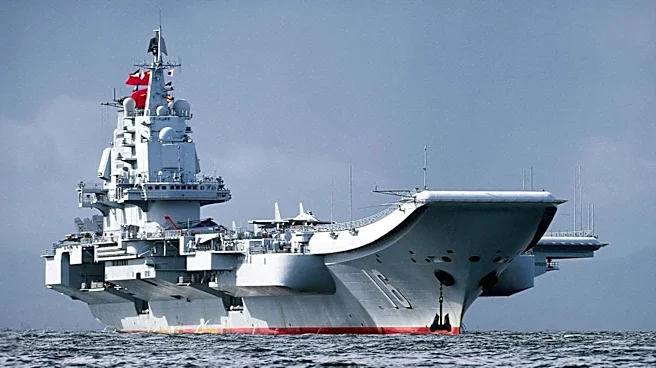
China is currently conducting 'area denial' military exercises in the Western Pacific, involving one of its aircraft carriers, the Liaoning, and other naval formations. This development was reported by Taiwan's Minister of National Defense Wellington
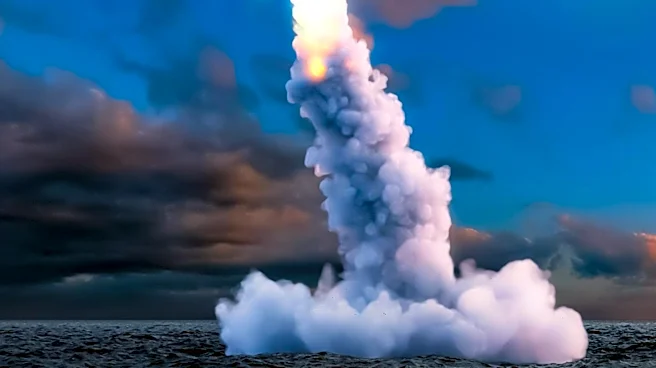
Koo. The drills are characterized by the deployment of over 100 Chinese naval and coast guard vessels operating near Taiwan, in the South China Sea, and extending into the Pacific. These exercises are perceived as an effort to prevent foreign intervention in a potential conflict, specifically aiming to deter U.S. or allied forces from assisting Taiwan if China were to initiate an attack. While China has not formally declared these specific drills, the Liaoning carrier's training in the Western Pacific was previously described as an annual routine to test long-range, open-ocean combat capabilities, not directed at any particular country. Taiwan's National Security Council Secretary-General Joseph Wu also detailed these deployments on his X account.
Why It's Important?
These 'area denial' drills by China carry significant implications for U.S. interests and regional stability in the Indo-Pacific. The primary objective of such exercises, as defined by the concept of Anti-Access/Area Denial (A2AD), is to restrict the ability of external forces, particularly the U.S. and its allies, to operate within a specific geographic area. This directly challenges the U.S.'s strategic presence and its commitment to regional security, including its unofficial support for Taiwan's defense. If successful, China's A2AD capabilities could complicate any potential U.S. military response to a conflict in the Taiwan Strait, potentially increasing the risk of escalation and undermining the credibility of U.S. alliances. The increased military activity also heightens the risk of miscalculation or accidental confrontation in an already tense region, impacting international shipping lanes and economic stability. For the U.S., these drills underscore the need to enhance its own military readiness and strengthen partnerships with regional allies to maintain a balance of power and deter aggression.
What's Next?
Taiwan's military is closely monitoring China's activities, utilizing joint intelligence, surveillance, and reconnaissance means, and exchanging intelligence with allies to respond appropriately. The timing of these drills, ahead of the APEC summit in Shenzhen where President Trump is expected to meet Chinese President Xi Jinping, and Taiwan's local elections, suggests a strategic message from Beijing. The U.S. and its allies are likely to continue their surveillance and potentially increase their own military presence or exercises in the region to counter China's actions. Diplomatic efforts will also be crucial, particularly during the upcoming APEC summit, to de-escalate tensions and reaffirm international norms regarding freedom of navigation and regional peace. The outcome of these interactions will significantly influence the future trajectory of U.S.-China relations and the security landscape of the Indo-Pacific.
Beyond the Headlines
The 'area denial' drills represent a broader strategic shift by China to project power beyond its immediate coastal waters and challenge the long-standing U.S. military dominance in the Western Pacific. This is not merely about Taiwan; it's about China's ambition to reshape the regional security architecture and establish itself as the preeminent power. The ethical implications revolve around the potential for these military maneuvers to normalize aggressive posturing and increase the likelihood of conflict, rather than promoting peaceful resolution of disputes. Legally, these actions test the boundaries of international law regarding freedom of navigation and sovereignty in disputed territories. Culturally, the escalating military tensions could foster a climate of distrust and animosity among nations in the region, impacting economic cooperation and people-to-people exchanges. The long-term shift could see a more militarized Indo-Pacific, with increased defense spending and a heightened risk of proxy conflicts, fundamentally altering global geopolitics.