


What's Happening?
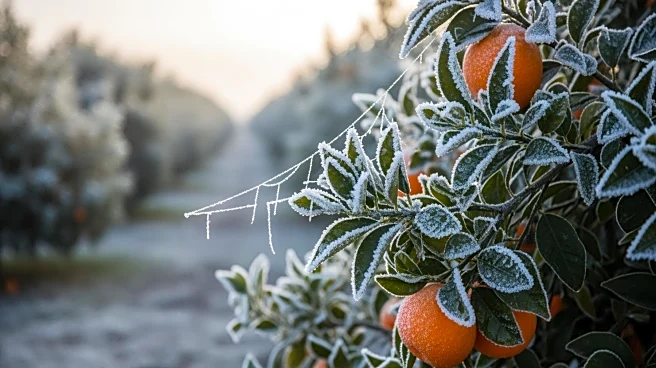
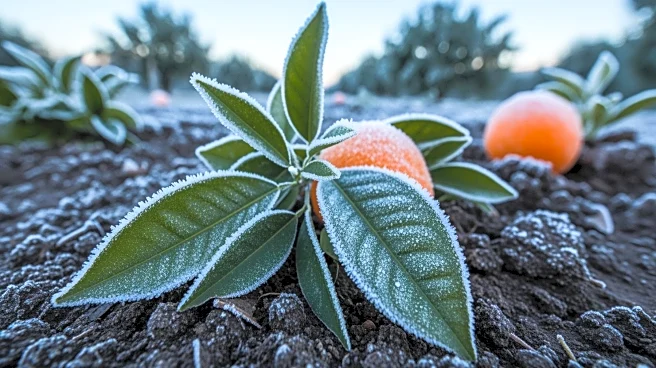
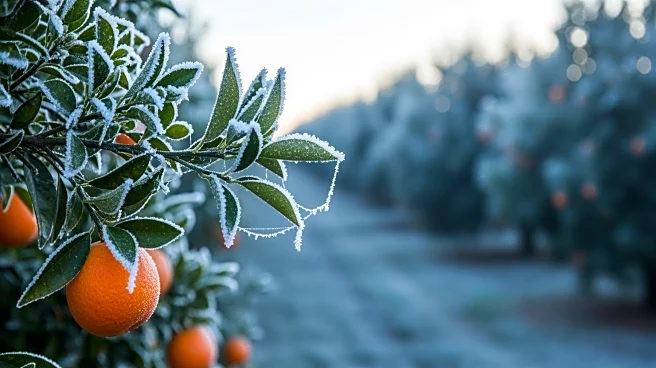
Florida's agricultural sector has suffered an estimated $3 billion in losses following two severe cold snaps around New Year's Eve and in January into February. The cold temperatures, brought by Winter Storms Ezra and Gianna, affected a wide range of
crops, including tomatoes, strawberries, and sugarcane. Florida Agricultural Commissioner Wilton Simpson highlighted the significant impact on farmers, ranchers, and growers, emphasizing the need for substantial support to recover from one of the most damaging freeze events in the state's history. The cold snap also affected the invasive green iguana population, immobilizing many of the reptiles.
Why It's Important?
The agricultural losses in Florida underscore the vulnerability of the state's farming industry to extreme weather events, which are becoming more frequent due to climate change. The financial impact on farmers and the potential disruption to the food supply chain highlight the need for effective disaster response and support mechanisms. The situation also raises questions about the resilience of agricultural practices and the importance of developing strategies to mitigate the effects of climate change on food production. The response from state and federal authorities, including potential financial aid, will be crucial in supporting the recovery of affected farmers.
What's Next?
In the wake of the agricultural losses, Florida's government and agricultural stakeholders are likely to seek federal assistance to support recovery efforts. Discussions on improving agricultural resilience to extreme weather events may gain momentum, with potential investments in infrastructure and technology to protect crops. The situation may also prompt a reevaluation of agricultural practices and policies to enhance sustainability and climate adaptability. Ongoing monitoring and assessment of the affected areas will be essential to guide recovery efforts and inform future strategies.
Beyond the Headlines
The impact of the cold snap on Florida's agriculture highlights broader issues of climate change adaptation and food security. It raises ethical considerations about the responsibility of governments and industries to protect vulnerable communities and ecosystems from climate-related risks. The situation also underscores the interconnectedness of environmental, economic, and social factors in addressing climate change challenges. As the frequency of extreme weather events increases, the need for comprehensive and collaborative approaches to climate resilience will become increasingly urgent.