





What's Happening?
The National Security Council, a U.S. government agency based in Washington, DC, is actively involved in discussions surrounding national security policy and foreign policy coordination, particularly concerning natural resources and conflict. This engagement
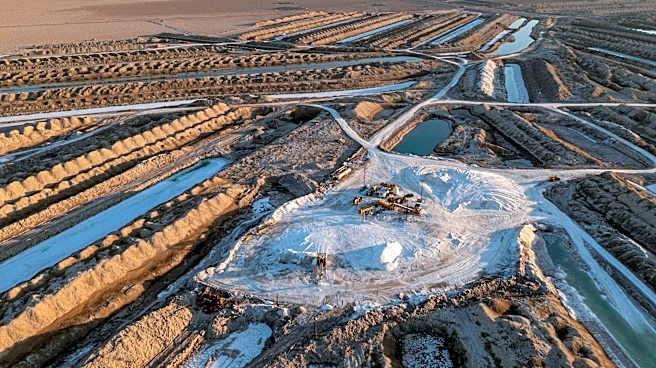
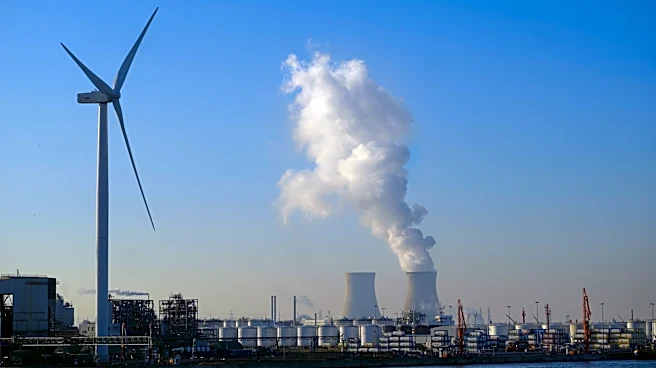
is highlighted by recent events and ongoing dialogues within international forums. For instance, the U.S. convened a Council briefing on 'Energy, Critical Minerals and Security' in March, emphasizing the strategic importance of these resources. The council's broader role includes providing advisory services and coordinating foreign policy, as evidenced by its participation in discussions about Somalia's security situation and the African Union Support and Stabilization Mission in Somalia (AUSSOM). Furthermore, the council addresses cyber and national security law, with former members contributing to discussions on global cyber incidents. The ongoing focus on natural resources reflects a growing international concern about their role in fueling conflicts and their connection to emerging technologies like artificial intelligence and the transition to renewable energy sources.
Why It's Important?
The National Security Council's involvement in discussions about natural resources and conflict is crucial for U.S. national interests and global stability. The illegal exploitation of natural resources often serves as a revenue source for armed groups, exacerbating conflicts and undermining peace efforts. By engaging in these dialogues, the U.S. aims to strengthen international cooperation to prevent such exploitation, reduce illicit revenues that sustain violence, and promote sustainable development. The focus on critical minerals is particularly significant given their essential role in clean energy, electronic technology, national defense, and aerospace industries. Securing a steady supply of these minerals is a strategic imperative for major powers, including the U.S., influencing geopolitical competition. The council's efforts contribute to shaping international norms and policies that can mitigate resource-linked conflicts, protect legitimate commerce, and ensure that resource revenues benefit local populations, thereby fostering long-term peace and security.
What's Next?
Future engagements by the National Security Council will likely continue to focus on strengthening international cooperation to address the links between natural resources and conflict. This may involve further participation in UN Security Council meetings, such as Arria-formula meetings, to exchange practical experiences and develop strategies for conflict prevention. The council will likely support initiatives aimed at building national and regional capacities for effective natural resource management and promoting coordinated international action against illicit trafficking. Discussions may also explore how growing competition for critical minerals, essential for AI systems and other emerging technologies, impacts international peace and security. The U.S. will likely continue to advocate for the effective implementation of existing frameworks like the Kimberley Process and the OECD Due Diligence Guidance to ensure responsible supply chains and prevent resources from fueling violence. Continued emphasis will be placed on intelligence sharing and security force cooperation to counteract criminal networks involved in resource plunder.
Beyond the Headlines
The National Security Council's engagement in natural resource discussions extends beyond immediate conflict resolution to address deeper ethical, legal, and economic implications. The increasing demand for critical minerals, driven by technological advancements and the global energy transition, raises questions about equitable resource distribution, environmental sustainability, and the potential for new forms of resource-driven geopolitical competition. The council's work implicitly touches upon the ethical responsibility of nations to ensure that the pursuit of essential resources does not inadvertently contribute to human rights abuses or environmental degradation in resource-rich but often vulnerable regions. Legally, these discussions can influence the development of international frameworks for resource governance and accountability. Economically, the focus on securing supply chains for critical minerals highlights the long-term shift in global economic power dynamics and the strategic importance of resource diplomacy in an increasingly interconnected world. This engagement reflects a broader understanding that national security is intrinsically linked to global resource management and sustainable development.