







What's Happening?
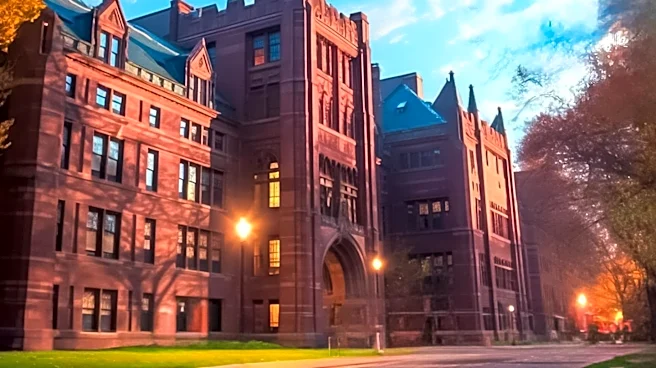
Yale Law School students and faculty are urging the university to resist settling with the Department of Justice (DOJ) over discrimination claims. The DOJ has not completed its inquiry or accused Yale Law School of any wrongdoing, yet the university is reportedly
considering a settlement. This move has been criticized by students, faculty, and alumni, who argue that settling would concede to unproven claims and compromise the university's independence. The DOJ's claims are part of a broader effort to pressure universities into compliance with federal standards following the Supreme Court's decision against affirmative action in admissions. Yale's leadership, however, appears to be negotiating with the DOJ, despite the lack of formal findings against the law school.
Why It's Important?
The situation at Yale highlights the tension between academic institutions and federal oversight, particularly in the context of admissions policies and diversity initiatives. A settlement could set a precedent for other universities, potentially leading to increased federal control over academic decisions. This could impact the diversity of student bodies and the autonomy of educational institutions. The outcome of this situation could influence how universities across the U.S. handle similar DOJ inquiries and shape the future of affirmative action policies in higher education.
What's Next?
If Yale decides to settle, it may face backlash from its community and set a precedent for other institutions. Conversely, if it chooses to fight the DOJ's claims, it could lead to a legal battle that tests the limits of federal authority over university policies. The decision will likely influence other universities facing similar pressures and could prompt a reevaluation of how institutions balance compliance with federal standards and the preservation of academic freedom.
Beyond the Headlines
The broader implications of this situation touch on the role of federal oversight in education and the potential erosion of institutional autonomy. The case also raises questions about the future of diversity in higher education and the legal strategies universities might employ to protect their admissions policies. The outcome could influence public perception of the DOJ's role in educational matters and the extent to which universities are willing to challenge federal authority.