
What's Happening?
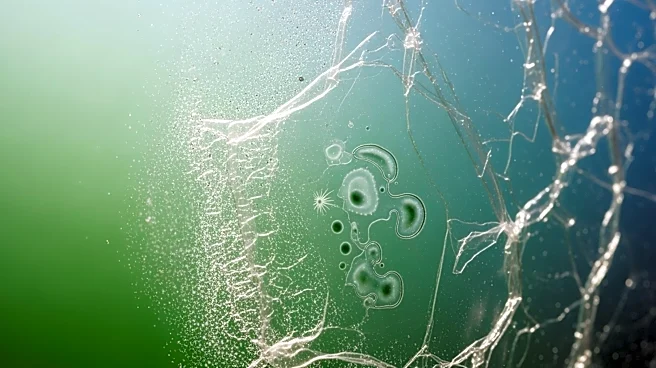
Researchers at the Shenzhen Institute of Synthetic Biology in China have engineered a new type of plastic that can self-destruct on command. This innovative material incorporates dormant microbes within
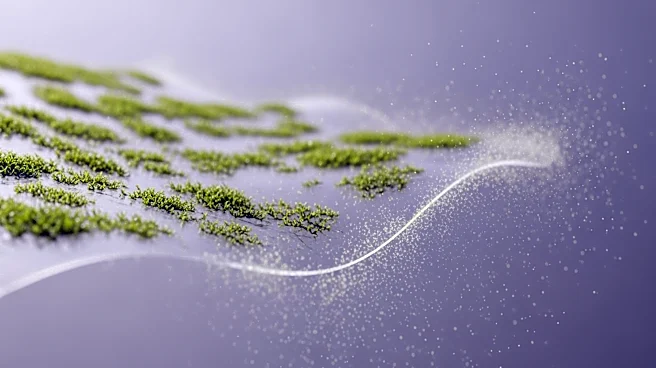
the plastic, which can be activated to break down the polymer completely in just six days, leaving no microplastic particles behind. The study utilized two strains of Bacillus subtilis, which work together to degrade the plastic film. This development is part of a broader effort to create 'living plastics' that combine traditional polymers with biological systems capable of initiating degradation. The research focused on polycaprolactone (PCL), a type of plastic used in 3D printing and surgical sutures, aiming to make its degradation faster and more controllable.
Why It's Important?
The creation of self-destructing plastic represents a significant advancement in addressing the global plastic pollution crisis. Traditional plastics persist in the environment for centuries, contributing to widespread pollution. By embedding microbes that can be activated to degrade the plastic, this technology offers a potential solution to reduce the environmental impact of plastic waste. This innovation could transform how plastics are used and disposed of, potentially leading to more sustainable practices in industries reliant on plastic materials. The ability to program the degradation of plastics could also influence regulatory policies and recycling processes, making them more efficient and environmentally friendly.
What's Next?
While the laboratory results are promising, further research is needed to adapt this technology for real-world applications. The current activation method, involving a warm nutrient broth, is not yet suitable for environments like oceans or landfills. Future research will focus on developing triggers that work in natural settings and expanding the technology to other types of plastics. The researchers aim to create a broader range of self-destructing plastics that can be used in various consumer products, potentially revolutionizing waste management and environmental conservation efforts.