





What's Happening?
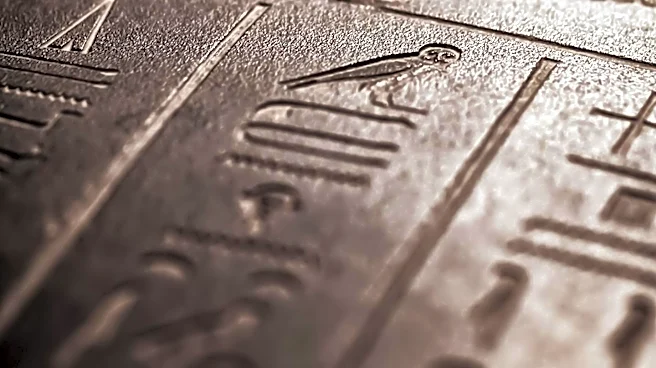
Researchers at Heidelberg University have successfully deciphered an 1800-year-old Roman curse tablet discovered by Dutch archaeologists in Heerlen, Netherlands. The tablet, made of lead, dates back to the 2nd century and was found in a pit beneath Heerlen's
town hall square, a site once part of the Roman military settlement Coriovallum. The tablet features a multicultural group curse inscribed in ancient Greek, with elements of Egyptian style, which is unusual for Northern Europe where Latin was more commonly used. The curse includes three magical symbols and names of four slaves, suggesting it was either directed against them or made in their name against an unnamed person. The discovery highlights the blending of Near Eastern, Egyptian, Jewish, and Christian traditions within the Roman Empire.
Why It's Important?
The deciphering of this curse tablet provides significant insights into the cultural and religious dynamics of the Roman Empire. It underscores the extent of cultural exchange and integration within the empire, as evidenced by the use of Greek and Egyptian elements in a Roman artifact found in Northern Europe. This finding contributes to the understanding of how different traditions merged and influenced each other, reflecting the complex social and religious fabric of the time. The tablet also sheds light on the role of magic and curses in Roman society, revealing how such practices were intertwined with daily life and religious beliefs, despite being considered taboo.
What's Next?
The newly-deciphered tablet is set to be displayed at the Heerlen Museum, offering the public a chance to engage with this piece of ancient history. Additionally, its inscription will be included in a scholarly publication, providing researchers and historians with valuable data for further study. This discovery may prompt further archaeological investigations in the region, potentially uncovering more artifacts that could offer additional insights into the cultural and religious practices of the Roman Empire.
Beyond the Headlines
The discovery of the curse tablet highlights the ethical considerations surrounding the study of ancient artifacts, particularly those involving human subjects like slaves. It raises questions about the lives and identities of the individuals named on the tablet and the societal structures that allowed for such practices. Furthermore, the blending of cultural elements in the tablet reflects broader themes of globalization and cultural exchange that are still relevant today, offering a historical perspective on contemporary issues of cultural integration and identity.