






What's Happening?
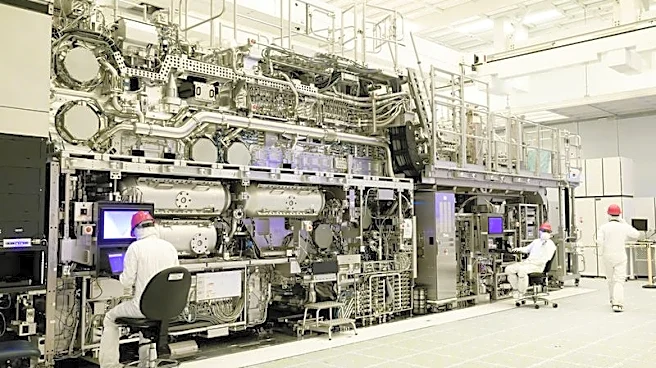
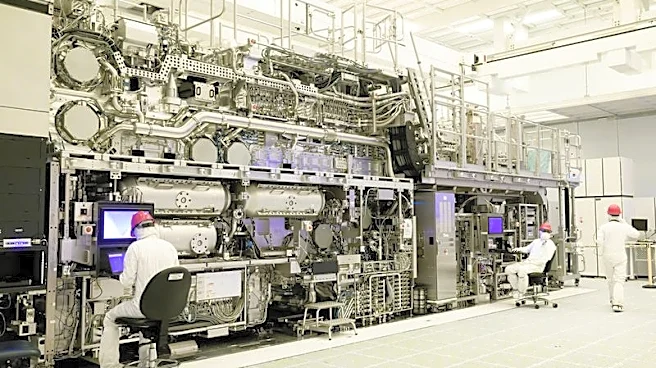
China has initiated mass production of domestically developed immersion deep-ultraviolet (DUV) lithography machines, a significant step in its effort to reduce reliance on foreign technology. The production is led by Shanghai Aishengna Electronic Technology
Group, a state-owned company. This development is part of China's broader strategy to achieve semiconductor self-sufficiency, a priority for President Xi Jinping. The DUV machines are crucial for advanced chipmaking, a field traditionally dominated by Dutch company ASML. Although the Chinese machines require further testing and are not yet on par with ASML's models, they provide an alternative for Chinese chipmakers, especially if Western countries impose further export restrictions.
Why It's Important?
The production of domestic DUV machines is a strategic move for China, potentially altering the global semiconductor landscape. By developing its own chipmaking tools, China aims to mitigate the impact of international trade restrictions and strengthen its technological independence. This could lead to increased competition in the semiconductor industry, challenging the dominance of established players like ASML. For U.S. and European companies, this development may necessitate a reassessment of their market strategies and supply chain dependencies. Additionally, it underscores the geopolitical tensions surrounding technology and trade, with potential implications for global economic policies.
What's Next?
The immediate focus for China will be on testing and refining the DUV machines to enhance their competitiveness. If successful, these machines could be deployed to major Chinese chipmakers such as SMIC and Hua Hong Semiconductor. This move might prompt Western governments to reconsider their export policies and strategies to maintain technological leadership. The global semiconductor industry will likely monitor these developments closely, as they could influence future collaborations, investments, and regulatory decisions.