





What's Happening?
Researchers from Cornell University, WWF Nepal, and local forestry authorities are conducting trials in Nepal to test synthetic chemical compounds as scent barriers against tigers and leopards. This project, named BioBoundaries, aims to develop invisible
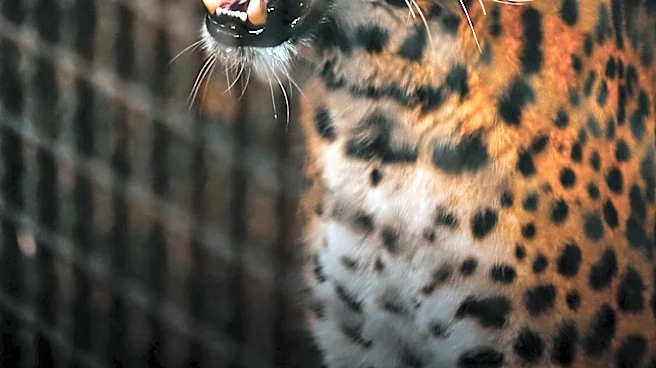
scent barriers to deter big cats from approaching livestock, farms, and human settlements. The trials, which began in October 2024 in the Khata corridor, involve 30 stations equipped with iron stakes, scent dispensers, and camera traps. Ten different compounds are being tested, with one compound, 3M3MB, having previously shown promise in reducing leopard attacks on livestock in Botswana. Camera traps have recorded tigers and leopards reacting to these dispensers, sniffing them and sometimes turning away, though it is not yet definitively proven that this method reduces livestock attacks. Some scents, particularly those identified in tiger scent markings, have even attracted greater interest from tigers.
Why It's Important?
The development of effective scent barriers could significantly impact human-wildlife conflict in regions where big cats and human populations coexist. Livestock depredation by tigers and leopards leads to economic losses for local communities and often results in retaliatory killings of these endangered animals. If successful, this technology could offer a non-lethal method to protect livestock and reduce such conflicts, contributing to both wildlife conservation and the economic stability of rural communities. However, researchers emphasize that these scent barriers should complement, rather than replace, existing robust livestock protection measures like stronger sheds and proper grazing management. The long-term effectiveness, cost, refilling frequency, and performance in various weather conditions are critical factors that will determine the widespread applicability and impact of this technology.
What's Next?
The ongoing trials in Nepal will continue to evaluate the effectiveness of the 10 tested compounds in deterring tigers and leopards. Researchers need to confirm whether the observed reactions of big cats to the scent dispensers translate into a measurable reduction in livestock attacks. Future steps will involve addressing practical considerations such as the cost of production and distribution of these substances, how often the dispensers would need refilling, and their performance over extended periods and in diverse weather conditions. If the effectiveness is confirmed, the technology could be scaled up, with dispensers installed near livestock enclosures, settlements, and potentially even attached to grazing animals. The findings from these trials will be crucial in determining the viability of scent barriers as a tool for wildlife management and conflict mitigation.
Beyond the Headlines
This research delves into the complex ethical and ecological dimensions of human-wildlife coexistence. While offering a promising non-lethal solution, the project highlights the ongoing challenge of balancing human development with wildlife conservation. The use of synthetic scents to manipulate animal behavior raises questions about potential long-term ecological impacts, such as altering natural movement patterns or habituating animals to certain smells. Furthermore, the varying responses of big cats to different compounds—with some scents attracting more interest—underscore the nuanced understanding required for effective wildlife management. The success of BioBoundaries could set a precedent for similar initiatives globally, influencing how other human-wildlife conflicts are addressed and potentially shifting conservation strategies towards more innovative and less invasive methods.