






What's Happening?
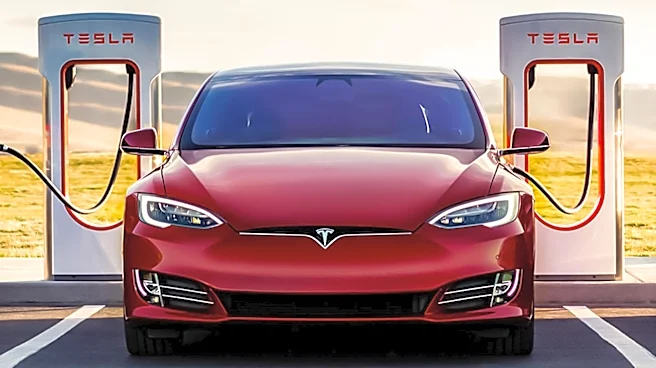
Tesla has initiated legal action against the Canadian province of Manitoba for excluding the automaker from its electric vehicle (EV) rebate program. The province's decision, which Tesla claims has cost its Canadian customers at least $560,000 in lost
rebates, is being challenged in Manitoba’s Court of King’s Bench. The rebate program, launched in 2024, initially offered up to $4,000 off a new EV priced under $70,000 and $2,500 off a used one. However, in 2025, the NDP government removed Tesla and Chinese-made vehicles from eligibility, citing economic protectionism in response to U.S. tariffs. Tesla argues that the exclusion was arbitrary and lacked transparency, as no formal explanation was provided. The company seeks reinstatement in the program and retroactive rebates for affected customers.
Why It's Important?
The lawsuit highlights the broader economic tensions between the U.S. and Canada, particularly in the context of trade policies and their impact on multinational corporations. Tesla's exclusion from the rebate program is seen as a retaliatory measure against U.S. tariffs, reflecting the complex interplay between international trade policies and local economic strategies. The outcome of this case could set a precedent for how similar disputes are handled in other provinces, potentially affecting Tesla's market presence in Canada. Additionally, the case underscores the challenges faced by companies operating across borders amid shifting political and economic landscapes.
What's Next?
If Tesla succeeds in its legal challenge, it could pave the way for the company to contest similar exclusions in other Canadian provinces, such as British Columbia and Nova Scotia, which have also removed Tesla from their rebate programs. A favorable ruling for Tesla might encourage other automakers to pursue legal action in similar circumstances, potentially leading to changes in how rebate programs are structured and administered. The case could also influence future trade negotiations between the U.S. and Canada, as both countries navigate the complexities of protecting domestic industries while fostering international business relations.