


What's Happening?
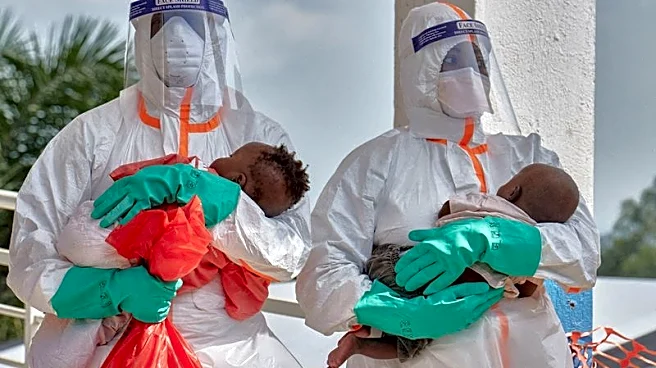
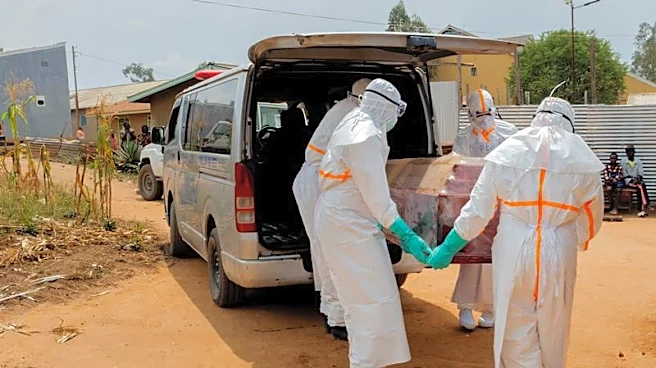
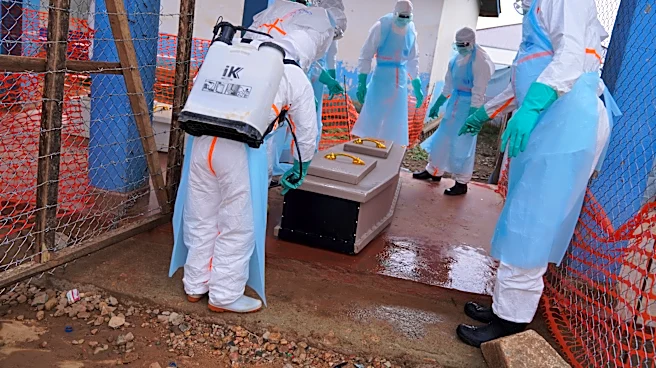
The Democratic Republic of the Congo is experiencing the fastest-growing Ebola outbreak in history, with over 1,700 deaths recorded in just 14 weeks. Despite the rapid rollout of trials for new and experimental vaccines and treatments, the outbreak continues
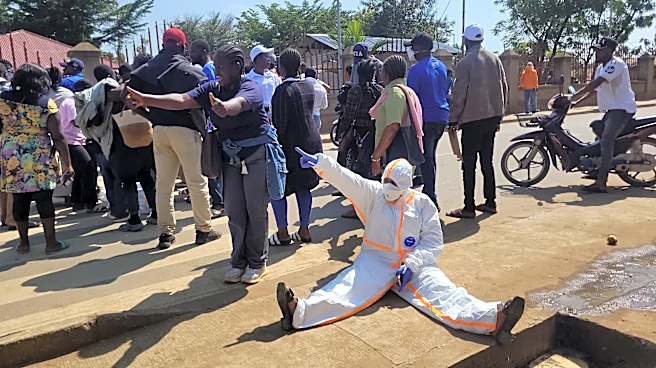
to outpace response efforts. The outbreak is concentrated in eastern Congo, a region plagued by decades of violence, which has hindered access to communities and disrupted the movement of personnel and supplies. The World Health Organization (WHO) has been able to start trials more quickly compared to previous outbreaks, but the Bundibugyo ebolavirus, a rare strain causing the current outbreak, has no existing vaccines or treatments. Efforts are underway to test experimental treatments and vaccines, including a phase 1 clinical trial by Moderna in Canada.
Why It's Important?
The outbreak poses a significant threat to public health, not only in the Democratic Republic of the Congo but also globally, due to the potential for the virus to spread across borders. The rapid spread of the virus highlights the challenges faced by health organizations in containing such outbreaks, especially in regions with ongoing conflict. The situation underscores the importance of international cooperation and the need for effective vaccines and treatments to prevent future outbreaks. The ongoing trials and research efforts are crucial in developing a viable solution to combat the virus and protect vulnerable populations.
What's Next?
The continuation of clinical trials and research into effective vaccines and treatments is critical. The WHO and other health organizations will likely intensify their efforts to contain the outbreak and prevent further spread. The success of these efforts will depend on the ability to access affected regions and the cooperation of local communities. The international community may also need to provide additional support and resources to assist in the response efforts.