








What's Happening?
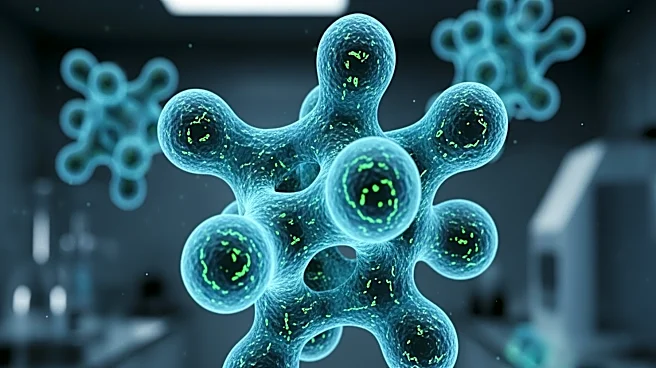
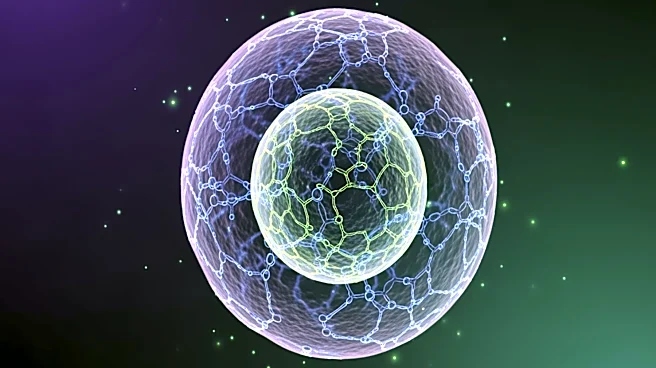
A new study led by researchers at the Whitehead Institute has demonstrated that re-engineering human cells can significantly enhance the potency of gene-editing particles. The research, published in Nature Communications, focuses on virus-like particles used
to deliver gene-editing tools into human cells. By identifying and modifying specific genes in the producer cells, the team was able to increase the production and delivery efficiency of these particles. This advancement could improve the effectiveness of gene-editing therapies by ensuring that more potent particles reach their target cells.
Why It's Important?
This breakthrough addresses a major challenge in the field of gene editing: the efficient and safe delivery of editing tools into the right cells. By enhancing the production of virus-like particles, the research could accelerate the development of gene therapies for various genetic diseases. The ability to produce more effective delivery vehicles could expand the applicability of gene-editing technologies, potentially leading to new treatments for conditions that are currently difficult to address. This advancement also highlights the importance of understanding cellular mechanisms in improving biotechnological applications.
What's Next?
The research team plans to extend their screening platform to explore other cellular modifications that could further enhance particle production. They are also collaborating with other research groups to improve the delivery of gene-editing tools into specific cell types, such as immune cells and neurons, which are crucial for treating a range of diseases. The ultimate goal is to develop gene-editing therapies that can be used in clinical settings to treat genetic disorders, moving closer to the widespread application of these technologies in medicine.