
What's Happening?
Minneapolis Mayor Jacob Frey's proposed 2027-2028 budget recommends significant cuts, including the complete defunding of the Partnership Engagement Fund (PEF), which currently provides $500,000 annually
to neighborhood associations. This proposal comes just months after Mayor Frey was honored by Refugees International with the McCall-Pierpaoli Humanitarian Award for Minneapolis's response to the federal occupation during Operation Metro Surge. During that period, nonprofit neighborhood associations played a crucial role in providing immediate grocery and rental assistance to families, mobilizing within a month to distribute over $350,000 in rental support. This rapid community response contrasted with the city's Emergency Rental Assistance Fund, which was not fully approved until 115 days after the federal presence began. The proposed budget also includes staff and budget cuts to the Civil Rights Department, Health Department, and Racial Equity, Inclusion and Belonging Department.
Why It's Important?
The proposed defunding of the Partnership Engagement Fund is significant because it directly impacts the operational capacity of Minneapolis's neighborhood associations, which have historically served as vital community support structures. These associations, often operating on modest budgets, rely on funds like PEF to power grassroots initiatives, such as community events and student-led projects that improve local infrastructure. The ability of these organizations to quickly respond to crises, as demonstrated during Operation Metro Surge, highlights their importance in addressing immediate community needs when larger bureaucratic systems face delays. Reducing this funding could weaken the city's social safety net and its capacity for localized problem-solving, potentially shifting more burdens onto city departments or leaving gaps in community services. This move could also be seen as undermining the very community efforts that Mayor Frey publicly praised, raising questions about the city's commitment to grassroots engagement.
What's Next?
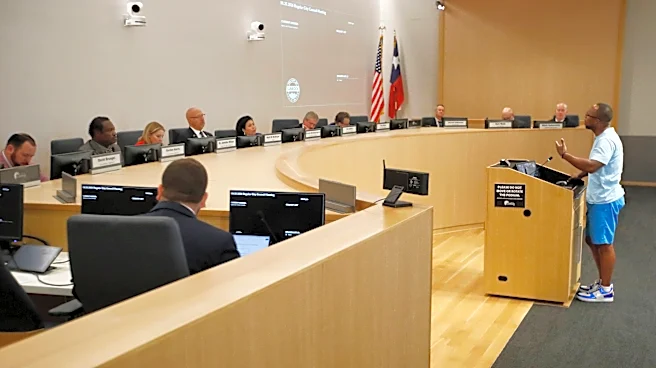
The proposed 2027-2028 budget, including the defunding of the Partnership Engagement Fund, will undergo further review and discussion. Stakeholders, particularly neighborhood associations and community advocates, are expected to voice their concerns regarding the potential impact of these cuts. The executive director of the Lowry Hill East Neighborhood Association, Alexander Kurt Johnson, has already publicly criticized the proposed defunding, arguing that now is the time to invest in neighborhood associations rather than reduce their funding. The city council will ultimately decide on the final budget, and there may be efforts to reinstate or reallocate funds to programs like PEF. The outcome will determine the level of financial support available for grassroots community initiatives and could influence the relationship between the city government and its neighborhood organizations.
Beyond the Headlines
The debate over the Partnership Engagement Fund cuts extends beyond mere budgetary figures; it touches upon the fundamental role of community-led initiatives in urban governance and resilience. Historically, Minneapolis has leveraged neighborhood associations, notably through programs like the Neighborhood Revitalization Program (NRP) in the 1990s, to address urban challenges and foster community development. While the NRP had its own equity shortcomings, it demonstrated the effectiveness of empowering local organizations. The current situation presents an opportunity to re-evaluate how the city partners with its communities, especially in an era where local organizations are increasingly called upon to fill gaps in public services. The decision on PEF could set a precedent for how Minneapolis values and supports its grassroots infrastructure, potentially influencing the city's long-term social cohesion and its ability to respond to future crises effectively and equitably.