



What's Happening?
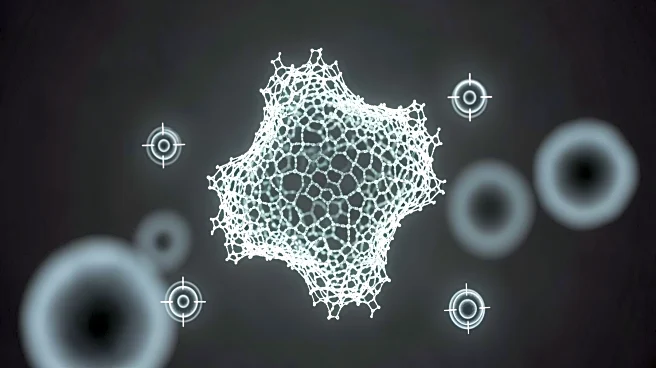
Researchers at Oregon State University have developed a new nanomaterial that targets and destroys cancer cells while sparing healthy tissue. This innovation, led by Oleh Taratula, Olena Taratula, and Chao Wang, involves a metal-organic framework (MOF)
that activates two chemical reactions within tumor cells, causing oxidative stress. The material is part of a growing field known as chemodynamic therapy (CDT), which exploits the unique chemical environment of tumors. Traditional CDT methods have been limited to generating either hydroxyl radicals or singlet oxygen, but the new MOF can produce both, enhancing its effectiveness. In preclinical trials, the nanomaterial demonstrated complete tumor regression in mice without adverse effects, suggesting a promising future for this approach in cancer treatment.
Why It's Important?
This development is significant as it represents a potential breakthrough in cancer treatment, offering a method to selectively target cancer cells while minimizing damage to healthy tissue. The ability to generate both hydroxyl radicals and singlet oxygen increases the therapeutic potential of CDT, potentially leading to more effective treatments with fewer side effects. This could revolutionize cancer therapy, providing a more targeted approach that reduces the systemic toxicity often associated with traditional cancer treatments. The success in preclinical trials suggests that this method could be applicable to various types of cancer, potentially benefiting a wide range of patients.
What's Next?
The research team plans to expand their studies to include other types of cancer, such as aggressive pancreatic cancer, to assess the broader applicability of their nanomaterial. Further preclinical trials are necessary before moving to human trials, which will be crucial in determining the safety and efficacy of this treatment in humans. If successful, this could lead to new clinical protocols and potentially a new standard in cancer treatment, pending regulatory approval and further validation.