



What's Happening?
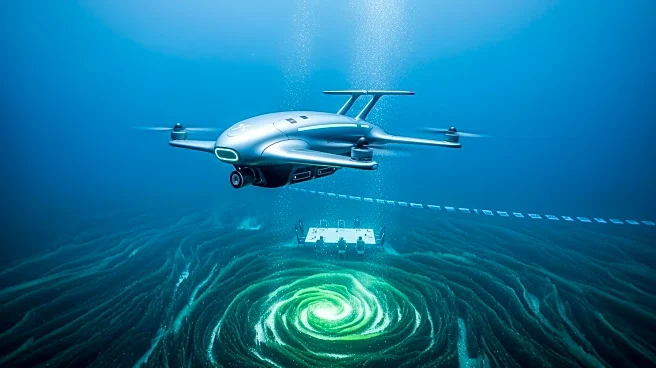
A Canadian-built robot network has uncovered a colossal mass of oceanic life, estimated at 346 million tons, equivalent to the weight of about 250 million elephants. This discovery, made possible by 903 autonomous floats from the global BGC-Argo program,
provides a detailed picture of the ocean's biomass, primarily composed of phytoplankton. These microscopic algae are crucial for the marine food web and play a significant role in producing breathable oxygen and sequestering atmospheric CO2. The data collected by these robotic floats, which operate beyond the reach of satellites, is expected to refine models predicting oceanic responses to climate change.
Why It's Important?
The discovery underscores the critical role of phytoplankton in maintaining climate balance and supporting marine ecosystems. By capturing atmospheric CO2 and producing oxygen, these organisms are vital to global carbon cycles and climate regulation. The ability to accurately measure and model these processes is essential for developing effective climate policies and managing marine resources. This advancement in oceanography could lead to better protection of high-value habitats and more informed fishery management, ultimately contributing to global efforts to combat climate change.
What's Next?
The findings highlight the need for continued investment in ocean monitoring and international collaboration to address challenges such as regional variability, ocean acidification, and the impact of warming on nutrient mixing. These factors could significantly alter plankton communities, affecting the entire marine food chain. The ongoing development of open science initiatives and enhanced monitoring capabilities will be crucial in adapting to these changes and ensuring the sustainable management of ocean resources.
Beyond the Headlines
This discovery represents a shift in how ocean life and climate interactions are understood, moving from surface-level observations to a comprehensive, three-dimensional view. The integration of satellite and subsurface data offers a more accurate picture of oceanic productivity, which is vital for setting realistic emissions targets and designing effective conservation strategies. The research also emphasizes the importance of technological innovation in addressing environmental challenges, highlighting the potential for engineering solutions to support ecological stewardship.