




What's Happening?
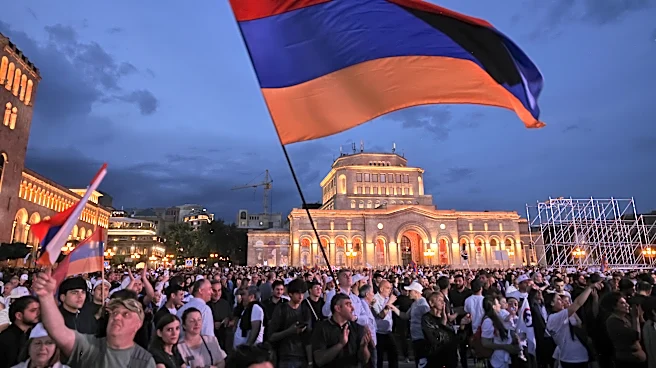
Armenia is preparing for parliamentary elections that could redefine its geopolitical alliances. Prime Minister Nikol Pashinyan is seeking closer ties with the European Union and the United States, moving away from Armenia's traditional alliance with Russia.
This shift comes after dissatisfaction with Russia's role in the Karabakh conflict, where Russian peacekeepers were accused of failing to protect Armenian interests. Pashinyan's government has taken steps to weaken ties with Moscow, such as joining the International Criminal Court and suspending participation in the Collective Security Treaty Organization. The election will determine whether Armenia continues this Western pivot or reverts to stronger ties with Russia.
Why It's Important?
The outcome of Armenia's election is significant for regional stability and international relations. A shift towards the West could alter the balance of power in the Caucasus, affecting Russia's influence in the region. It could also open up new economic opportunities for Armenia through increased Western investment and cooperation. However, this move risks economic retaliation from Russia, which has already imposed trade restrictions on Armenian goods. The election results will have implications for Armenia's foreign policy, economic development, and its role in regional geopolitics.
What's Next?
If Pashinyan's party wins, Armenia is likely to continue strengthening ties with the West, potentially finalizing agreements with Azerbaijan and increasing cooperation with the EU and the U.S. However, this could provoke further economic and political pressure from Russia. The opposition, favoring closer ties with Moscow, could challenge Pashinyan's policies, leading to internal political tensions. The international community will be closely watching the election results, as they will influence Armenia's future direction and its relationships with major global powers.