

What's Happening?
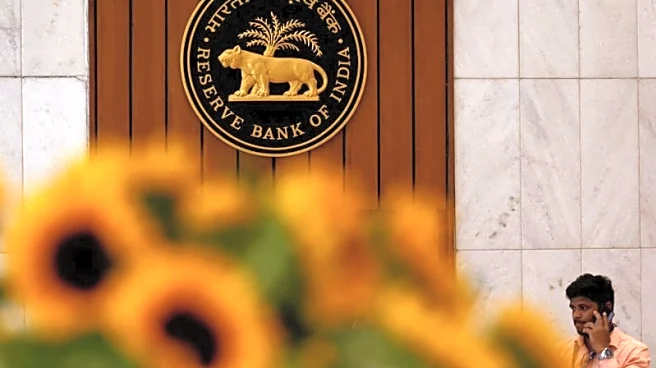
The Reserve Bank of India (RBI) has decided to keep its key policy rates unchanged at 5.25%, following the announcement of trade deals with the U.S. and the European Union. This decision comes after a series of rate cuts totaling 125 basis points last
year. The RBI's move is influenced by the easing of growth headwinds due to these trade agreements. The U.S. had previously imposed 50% tariffs on Indian exports, which have now been reduced to 18%, alleviating some of the external pressures on India's economy. The RBI's focus will now shift to the transmission of previous rate cuts, as the yields on long-term bonds are expected to remain stable. India's economy is projected to grow by 7.4% in the fiscal year ending March 2026, maintaining its status as the world's fastest-growing large economy.
Why It's Important?
The RBI's decision to hold rates steady is significant as it reflects confidence in the country's economic outlook following the trade agreements with major global partners. The reduction in U.S. tariffs on Indian exports is expected to boost trade relations and economic growth. This move is crucial for maintaining India's growth trajectory and managing inflation, which remains low. The decision also highlights the importance of stable monetary policy in supporting economic recovery and growth. Stakeholders in the financial sector, including banks and investors, will be closely monitoring the impact of these developments on long-term bond yields and investment opportunities.
What's Next?
The RBI is likely to maintain its current policy stance for at least a year, focusing on the effective transmission of previous rate cuts. The central bank will continue to monitor inflation and growth indicators to ensure economic stability. The Indian government is also planning to borrow 17.2 trillion rupees in the upcoming financial year, which will require careful management of fiscal policies. The successful implementation of the U.S.-India trade deal will be crucial in sustaining economic momentum and addressing any potential external challenges.