






What's Happening?
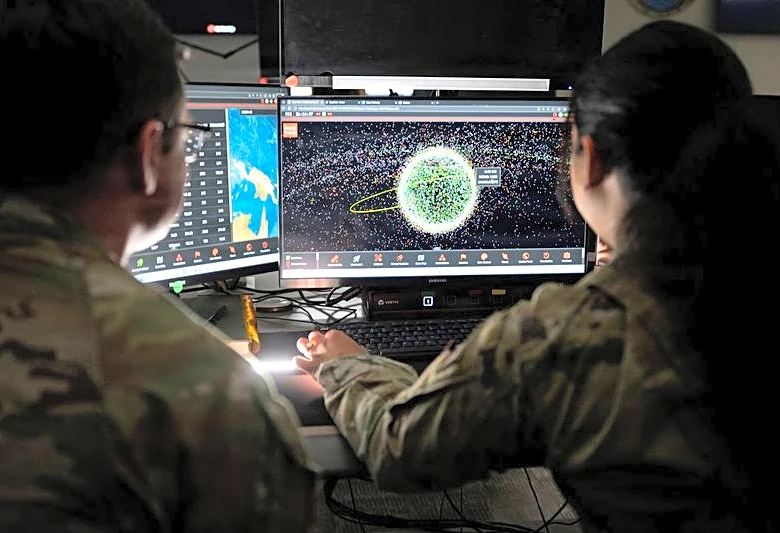
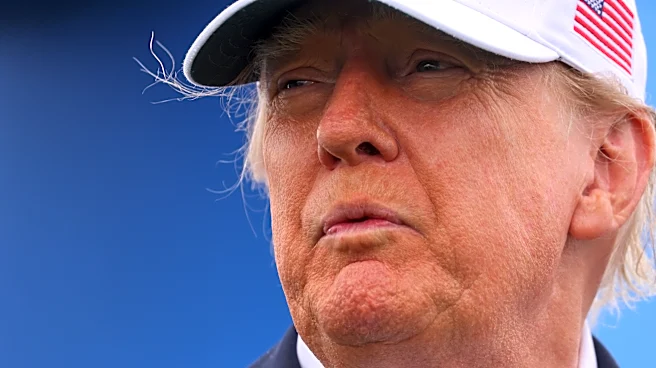
President Trump on Sunday dismissed concerns regarding a report that Chinese entities provided satellite imagery to Iran before a missile attack that killed three U.S. troops. Speaking aboard Air Force One, President Trump stated that China "spies on us"
just as "we spy on them." The Wall Street Journal report, which Reuters could not immediately verify, alleged that Chinese entities supplied high-resolution satellite imagery of Muwaffaq Salti Air Base in Jordan to Iran prior to the July 17 missile attack. When asked if he would raise the issue with Chinese President Xi Jinping during an upcoming meeting, President Trump did not directly answer, instead equating the surveillance activities of both nations. He reiterated his belief that President Xi has "behaved reasonably well" and that the U.S. also behaves "reasonably well."
Why It's Important?
President Trump's comments are significant as they downplay a potentially serious national security concern involving a U.S. adversary, Iran, and a major global power, China. His public acknowledgment of reciprocal spying between the U.S. and China, while not new in intelligence circles, is notable for its directness from a U.S. President. This stance could influence how the U.S. government addresses future intelligence-sharing allegations involving China and its adversaries. It also highlights the complex and often contradictory nature of U.S.-China relations, where economic interdependence and diplomatic engagement coexist with strategic competition and intelligence gathering. The incident underscores the ongoing challenges in maintaining security for U.S. military personnel abroad amidst evolving geopolitical alliances and technological capabilities.
What's Next?
President Trump and Chinese President Xi Jinping are expected to meet in the U.S. on September 24, though China has yet to officially confirm the meeting. It remains to be seen whether the alleged satellite imagery incident will be formally addressed during this high-level discussion, given President Trump's public dismissal of the concerns. The U.S. administration's approach to China, balancing cooperation with competition, will likely continue to be a key aspect of its foreign policy. Further investigations into the Wall Street Journal report may also shed more light on the extent and nature of the alleged intelligence sharing, potentially influencing future U.S. diplomatic and security strategies concerning Iran and China.
Beyond the Headlines
President Trump's remarks touch upon the broader, often unacknowledged reality of international espionage, where major powers routinely engage in intelligence gathering against each other. By framing China's actions as equivalent to those of the U.S., he normalizes such activities, potentially shifting public perception of what constitutes a breach of trust versus standard statecraft. This perspective could have long-term implications for how the U.S. communicates about and responds to foreign intelligence operations, potentially leading to a more pragmatic, less confrontational public discourse on these issues. It also raises questions about the ethical and legal boundaries of intelligence sharing, especially when it contributes to attacks against U.S. personnel, and how such incidents are weighed against broader geopolitical objectives.