





What's Happening?
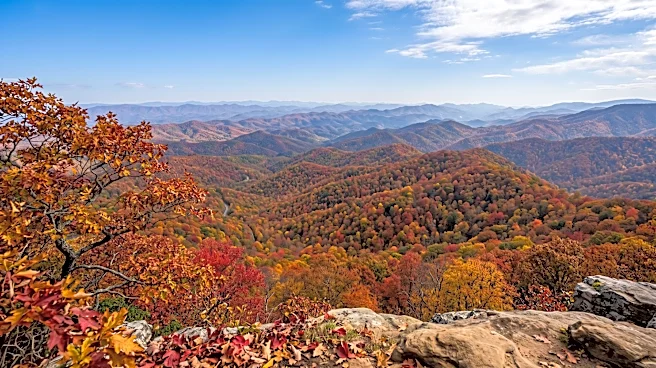
East Tennessee State University (ETSU) has released its latest Fall Color Report, indicating that vibrant autumn foliage is now developing in the Tri-Cities area. According to ETSU campus arborist Travis Watson and Tennessee State Climatologist Dr. Andrew
Joyner, peak fall color conditions are anticipated from late October to early November. This year's display is described as slightly better than initial expectations, largely due to favorable weather patterns. These conditions are also expected to prolong the viewing window for the fall colors. The report provides an update for residents and visitors interested in observing the seasonal changes in the region's natural landscapes.
Why It's Important?
The annual fall color display is a significant natural event that draws tourism and recreational activities to the East Tennessee region. A better-than-expected and extended viewing window for fall foliage can positively impact local economies, particularly businesses reliant on tourism, such as hotels, restaurants, and outdoor recreation providers. The involvement of ETSU and the Tennessee State Climatologist in reporting these conditions underscores the scientific and environmental interest in seasonal changes and their broader ecological implications. For residents, it signifies a period of natural beauty and outdoor engagement, contributing to local quality of life. The report also highlights the influence of weather patterns on natural phenomena, which can be relevant for understanding broader climate trends and their effects on regional ecosystems.
What's Next?
Residents and visitors in the Tri-Cities region can expect the fall colors to reach their peak from late October to early November. The favorable weather conditions suggest that the vibrant display may last longer than usual, offering an extended period for viewing and related activities. Local tourism boards and businesses may leverage this positive forecast to promote travel and engagement with the natural beauty of East Tennessee. Continued monitoring of weather patterns will be crucial for any further updates on the duration and intensity of the fall foliage season.
Beyond the Headlines
Beyond the immediate aesthetic appeal, the quality and duration of fall foliage can serve as an indicator of regional environmental health and climate stability. Variations in fall color intensity and timing can be linked to factors like temperature, rainfall, and sunlight exposure throughout the growing season. The collaboration between a university arborist and a state climatologist in issuing this report highlights the interdisciplinary nature of environmental observation and the role of academic institutions in public information. This natural phenomenon also fosters a connection between communities and their local environment, encouraging outdoor activities and appreciation for natural cycles.