





What's Happening?
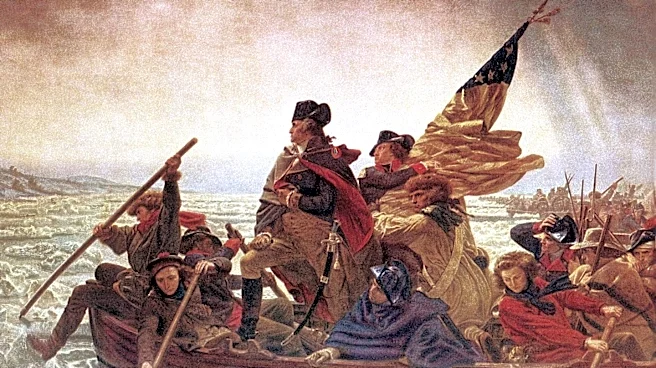
In October 1776, during the American Revolutionary War, a brigade of Massachusetts patriots led by Colonel John Glover played a crucial role in delaying the British advance at the Battle of Pell's Point. This engagement, fought in the modern-day Pelham
Bay Park area, saw Glover's heavily outnumbered forces confront British General William Howe's troops. The British were pursuing General George Washington's Continental Army, which had withdrawn northward into Westchester County after a series of defeats, including the Battle of Long Island. Washington's objective was to secure supply lines and avoid encirclement. Colonel Glover's resistance at Pell's Point provided Washington with the necessary time to move the main army further north to White Plains, preventing a decisive British victory and allowing the Continental Army to remain intact.
Why It's Important?
The Battle of Pell's Point, and specifically Colonel John Glover's actions, were strategically vital for the Continental Army during a precarious period of the American Revolutionary War. By delaying the British, Glover's brigade prevented General Howe from cutting off Washington's retreat and potentially delivering a war-ending blow. This allowed Washington to regroup and prepare for subsequent engagements, most notably the Battle of White Plains. The ability of a smaller, less experienced American force to hold off a superior British contingent demonstrated the resilience and tactical acumen of the Continental Army and its commanders. This event underscored the importance of delaying tactics in asymmetric warfare and contributed to the overall American strategy of attrition against the British, ultimately aiding in the long-term success of the revolution.
What's Next?
While the immediate aftermath of the Battle of Pell's Point led to the Battle of White Plains, where Washington executed a disciplined withdrawal, the broader implications for the American Revolution were significant. The continued survival of the Continental Army, largely due to such delaying actions, meant the war would not be a swift British victory. This prolonged conflict would necessitate further strategic maneuvers, international alliances, and sustained public support for the American cause. The actions of figures like Colonel John Glover set a precedent for American military resolve, influencing future engagements and contributing to the eventual independence of the United States. The historical narrative continues to highlight these critical moments of resistance that shaped the outcome of the war.
Beyond the Headlines
The Battle of Pell's Point, though often overshadowed by larger battles, exemplifies the critical role of individual leadership and the determination of local militias in the American Revolution. Colonel John Glover, a Marblehead fisherman, commanded a regiment primarily composed of seamen and fishermen, who proved surprisingly effective in land combat. Their unique skills and adaptability were crucial in navigating the terrain and executing the delaying action. This event highlights the diverse composition of the Continental Army and the willingness of ordinary citizens to fight for independence. It also underscores the ethical dimension of warfare, where outnumbered forces make strategic sacrifices to protect a larger cause, demonstrating courage and commitment against overwhelming odds. The legacy of such engagements continues to inspire narratives of American resilience and ingenuity.