



What's Happening?
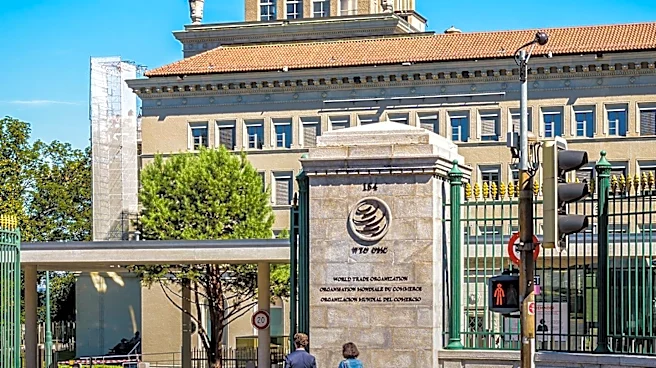
The World Trade Organization (WTO) has reported a 1.9% growth in global merchandise trade for the first quarter of 2026, compared to the previous period, and a 3.2% increase compared to the same quarter in 2025. This growth has been attributed to a surge
in trade of electronic components related to the ongoing AI boom, which has offset the negative impacts of the Iran war. The conflict in the Middle East has led to significant disruptions, particularly in the Strait of Hormuz, affecting shipping and trade flows. Despite these challenges, the WTO notes that AI-related investments have bolstered trade volumes, especially in Asia and North America.
Why It's Important?
The resilience of global trade amidst geopolitical tensions highlights the significant role of technology and AI in driving economic growth. The AI boom has not only mitigated the adverse effects of the Iran conflict but has also spurred trade in electronic components, benefiting regions like Asia and North America. This development underscores the potential of AI to influence global trade dynamics, offering opportunities for economic stakeholders to capitalize on technological advancements. However, the ongoing conflict in the Middle East poses risks to trade stability, particularly for regions dependent on energy imports.
What's Next?
The WTO anticipates larger contractions in Middle East trade flows by the end of the year, with continued growth expected in Asia and North America. The global trade outlook will largely depend on whether the AI boom can sustain its momentum against the backdrop of geopolitical tensions. Stakeholders in the technology and trade sectors will likely monitor these developments closely, as they could influence future investment and trade strategies. Additionally, the extent of shipping disruptions in the Strait of Hormuz will be a critical factor in determining the trajectory of global trade.