



What's Happening?
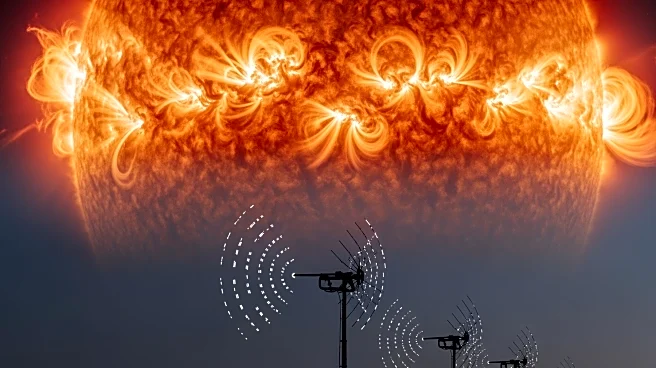
A powerful X4.2 solar flare erupted from the sunspot group AR4366, causing significant radio communication disruptions across parts of western Africa and southern Europe. The flare, which peaked at 7:13 a.m. EST, is part of a series of intense solar activities
from this rapidly growing and magnetically complex sunspot region. X-class solar flares, like the one observed, are the most potent type and can lead to widespread radio disturbances. Although these flares can sometimes be accompanied by coronal mass ejections (CMEs) that may trigger geomagnetic storms, no CME signatures were detected following this particular eruption. The sunspot region, despite its frequent flares, has not yet released significant solar material into space, with only a previous X8.4 flare resulting in a minor CME.
Why It's Important?
The occurrence of such powerful solar flares highlights the sun's potential to impact Earth's technological systems, particularly radio communications and satellite operations. The disruptions caused by these flares can affect various sectors, including aviation, maritime, and emergency services, which rely heavily on radio communications. Understanding and predicting solar activity is crucial for preparing and mitigating the effects on these critical infrastructures. The absence of a CME in this instance reduces the risk of geomagnetic storms, which can have more severe consequences, such as power grid failures and satellite malfunctions.
What's Next?
Space weather forecasters will continue to monitor the sunspot region AR4366 for further activity. The potential for additional solar flares remains, and forecasters will be vigilant for any signs of CMEs that could pose a greater threat to Earth's geomagnetic environment. The ongoing observation will help in issuing timely warnings to industries and services that might be affected by future solar events.