








What's Happening?
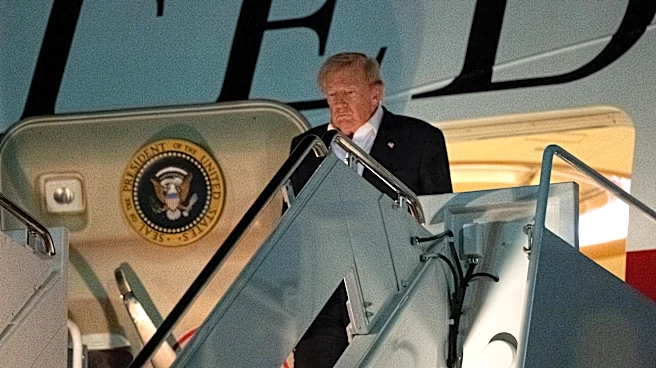
The United States has launched retaliatory strikes against Iran after Iranian forces attacked a Cyprus-registered container ship in the Strait of Hormuz. The incident occurred when the Iranian Revolutionary Guards fired on the vessel, claiming it was
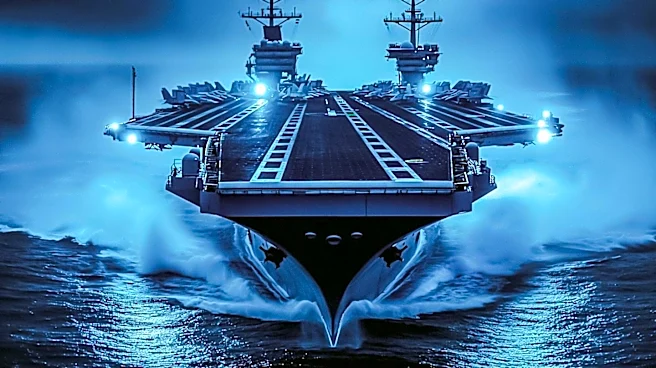
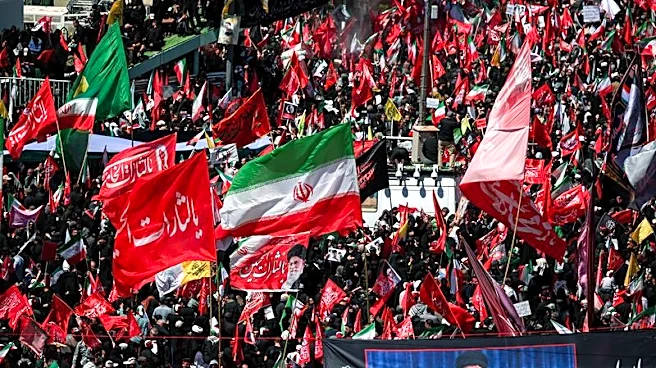
on an unauthorized route. This led to the ship being abandoned by its crew due to fire and damage. In response, the U.S. military targeted approximately 140 Iranian military sites. The situation has escalated tensions in the region, with Iran closing the Strait of Hormuz and launching missiles and drones at neighboring Gulf countries, including Qatar, the UAE, and Bahrain. The closure of the strait, a critical passage for global oil and gas exports, poses significant economic implications.
Why It's Important?
The closure of the Strait of Hormuz by Iran is a critical development, as it is a vital conduit for the world's oil and gas exports. Any disruption in this region can have far-reaching impacts on global energy markets and economic stability. The U.S. strikes and Iran's retaliatory actions further strain the already tense relations between the two nations, potentially affecting international diplomatic efforts aimed at resolving Middle Eastern conflicts. The escalation could lead to increased military engagements, impacting regional security and international trade. Stakeholders in the energy sector, as well as global political leaders, are closely monitoring the situation due to its potential to disrupt global supply chains and economic stability.
What's Next?
The ongoing conflict and closure of the Strait of Hormuz are likely to prompt further diplomatic efforts to de-escalate tensions. Mediators, including a Qatari delegation, are reportedly working to restore dialogue between the U.S. and Iran. However, with Iran's supreme leader vowing revenge and the U.S. maintaining a strong military stance, the path to a peaceful resolution remains uncertain. The international community may increase pressure on both nations to reopen the strait and ensure the safety of commercial shipping. Future developments will depend on the willingness of both parties to engage in negotiations and the effectiveness of diplomatic interventions.
Beyond the Headlines
The conflict highlights the strategic importance of the Strait of Hormuz and the geopolitical tensions surrounding control over this critical waterway. Iran's insistence on controlling the passage and charging fees challenges international maritime law, which generally prohibits tolls on straits used for international navigation. The situation underscores the broader struggle for influence in the Middle East, with implications for global energy security and international law. The potential for further military escalation raises ethical concerns about the impact on civilian populations and the environment in the region.