







What's Happening?
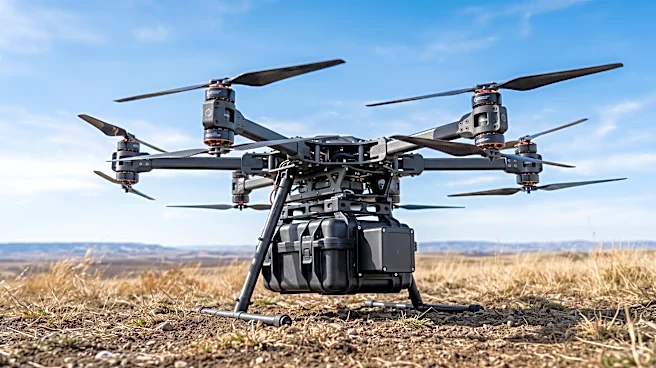
Ukrainian company SkyFall has introduced the StarGate uncrewed aircraft, a specialized drone designed for aerial casualty evacuation from combat zones. This hexacopter has already been used in two successful rescue missions, airlifting wounded Ukrainian soldiers
from the front lines. One soldier, Izyum, an infantryman, was rescued after sustaining severe foot injuries in an area inaccessible to ground robots and too dangerous for traditional medical teams or crewed helicopters. The drone, piloted by KVN of Ukraine's 475th Separate Assault Regiment, navigated through Russian drone activity and electronic warfare. The missions involved a coordinated effort, with other drones providing protection and distraction for the StarGate aircraft. These evacuations represent a new tactical approach in battlefield medical retrieval, particularly in high-risk environments where conventional methods are unfeasible. SkyFall aims to produce 1,000 StarGate drones per month by the end of 2026, with units costing approximately $50,000 each and capable of carrying up to 330 pounds at speeds over 60 miles per hour.
Why It's Important?
The development and deployment of the StarGate drone signify a critical advancement in military medical logistics and battlefield survival. In modern warfare, characterized by extensive drone surveillance and electronic warfare, traditional casualty evacuation methods are increasingly perilous. This technology offers a lifeline for soldiers wounded in inaccessible or heavily contested areas, potentially reducing fatalities and severe long-term injuries. The ability to conduct aerial evacuations without risking human pilots or ground teams could fundamentally alter battlefield medical protocols. While currently considered a last resort, the success of these missions suggests a future where drone-based casualty evacuation becomes a standard practice, enhancing the safety and operational capabilities of military forces. The expansion of such technology could also influence defense strategies globally, prompting other nations to invest in similar autonomous medical transport systems.
What's Next?
Following the successful initial missions, Ukrainian officials and defense companies like SkyFall are advocating for the expansion of aerial drone casualty evacuations as a standard practice. CODE 9.2, a Ukrainian military unit, plans to establish dedicated units for these missions, and SkyFall intends to create a specific department for evacuations. The company's goal to produce 1,000 StarGate drones monthly by late 2026 indicates a significant scaling up of this capability. This expansion will likely involve further development of drone survivability features, such as AI-enabled navigation and communication redundancies, to counter evolving electronic warfare threats. The increased deployment of these drones could lead to more frequent and efficient evacuations, potentially saving more lives and influencing tactical decisions on the battlefield. Other military forces worldwide will likely observe these developments closely, potentially leading to similar technological adoptions.
Beyond the Headlines
The emergence of specialized casualty evacuation drones like StarGate raises profound ethical and strategic questions about the future of warfare. While offering clear humanitarian benefits by saving lives, it also further automates aspects of combat, potentially altering the human element of conflict. The reliance on AI-enabled navigation and communication redundancies highlights a growing trend towards autonomous systems in critical military operations, pushing the boundaries of human-machine collaboration in high-stakes environments. This technology could also lead to a re-evaluation of military medical training and infrastructure, shifting focus towards integrating drone operations into standard procedures. Furthermore, the development could spur a new arms race in drone technology, with adversaries seeking to develop countermeasures against such rescue operations, thereby escalating the technological complexity of modern warfare.