



What's Happening?
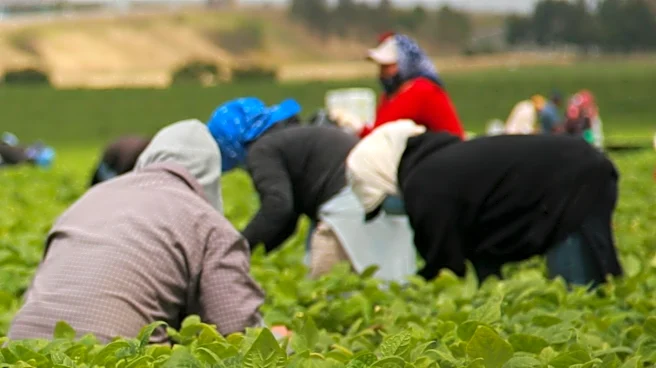
The Episcopal Farmworker Ministry in North Carolina is calling for aid to support H-2A farmworkers after the U.S. government reduced their wages. The wage cuts, which vary by state, have significantly impacted farmworkers' ability to support themselves
and their families. In North Carolina, the hourly wage for these workers dropped from $16.16 to $12.78. The ministry, part of the Diocese of East Carolina, provides various services to farmworkers, including English classes, mental health services, and economic development projects. The wage reduction has led to a decrease in the number of workers willing to return for the next season, exacerbating labor shortages and affecting agricultural production.
Why It's Important?
The reduction in wages for H-2A workers highlights the challenges faced by agricultural laborers in the U.S., who are essential to the country's food supply chain. The wage cuts could lead to a significant labor shortage, impacting crop yields and driving up food prices. The situation underscores the need for comprehensive agricultural labor reform to ensure fair compensation and working conditions for farmworkers. The Episcopal Church's advocacy for farmworker rights reflects broader societal concerns about the treatment of immigrant laborers and the sustainability of the agricultural sector. Addressing these issues is crucial for maintaining a stable and ethical food production system.
What's Next?
The Episcopal Farmworker Ministry is actively seeking donations and support to alleviate the financial strain on farmworkers. They are collecting groceries, clothing, and other essentials to support the workers' immediate needs. The ministry is also exploring the development of community gardens and a commercial laundry facility to provide additional resources. On a policy level, there may be renewed efforts to pass legislation like the Farm Workforce Modernization Act, which aims to improve conditions for farmworkers. Continued advocacy and support from religious and community organizations will be vital in pushing for reforms that protect the rights and livelihoods of agricultural workers.