
What's Happening?
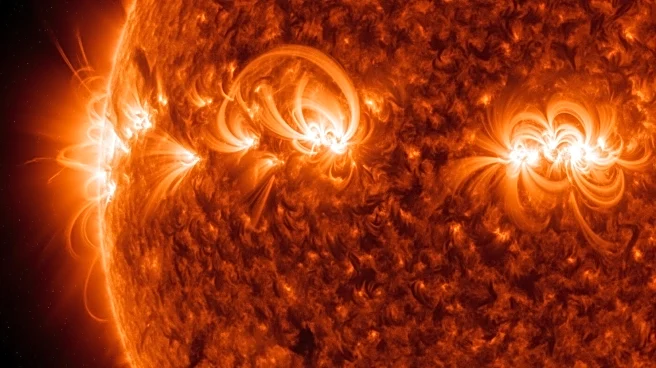
NASA's Solar Dynamics Observatory has detected unexpected solar activity, suggesting that Solar Cycle 25 is more intense than initially predicted. Originally forecasted to be weak, the cycle has shown
a significant increase in sunspot numbers and solar flares, peaking in October 2024 with a sunspot number of approximately 160.8, surpassing previous expectations. This activity includes a record number of X-class solar flares and a peculiar polar vortex formation at the Sun's north pole. The phenomenon has prompted scientists to reconsider their understanding of solar cycles, particularly the Centennial Gleissberg Cycle, a 100-year solar rhythm that may be influencing current solar behavior.
Why It's Important?
The intensified solar activity has significant implications for Earth, particularly in terms of space weather. Increased solar flares and geomagnetic storms can disrupt satellite operations, power grids, and GPS systems, potentially leading to economic losses. The heightened activity also poses risks to astronauts and space missions due to increased radiation exposure. On a positive note, the increased solar activity could result in more frequent and widespread auroras, visible at lower latitudes than usual. Understanding these solar patterns is crucial for preparing and mitigating the impacts on technology and infrastructure.
What's Next?
As Solar Cycle 25 progresses, scientists anticipate continued monitoring and analysis to better understand the implications of the Centennial Gleissberg Cycle and its potential impact on future solar activity. The current cycle's unexpected intensity suggests that future cycles could be stronger, necessitating advancements in space weather forecasting and infrastructure resilience. Researchers are also focusing on the Sun's polar regions, which remain challenging to study, to gain insights into the mechanisms driving these unusual solar phenomena.
Beyond the Headlines
The unusual solar activity highlights the complexity and unpredictability of solar dynamics, challenging existing models and theories. The observed polar vortex and increased solar activity suggest that the Sun's behavior is more dynamic than previously understood, prompting a reevaluation of solar physics. This development underscores the importance of continued investment in solar observation missions and research to enhance our understanding of the Sun's influence on Earth and the broader solar system.