


What's Happening?
The Russian government has extended its ban on the export of diesel, marine fuel, and gas oil by producers until September 30, according to DW. This extension adds a month to the original August 31 expiration date for producers, while a broader general
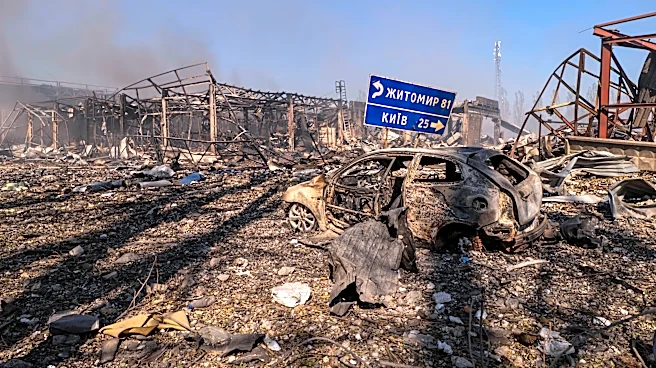
ban on fuel exports remains in effect until January 31, 2027. This measure is an attempt to stabilize Russia's domestic fuel market, which has been significantly impacted by a record 21 Ukrainian drone attacks on oil refineries throughout August. Data from EA Analytics indicates that Russian oil refining has plummeted to its lowest level in over two decades, processing an average of just 3.8 million barrels per day in August. This is significantly below the traditional summer output of 5.3 to 5.5 million barrels per day needed to meet heightened seasonal and agricultural demand. The steep decline in refining capacity has led to severe domestic supply issues, with gasoline production and deliveries falling by nearly 20% year-on-year during the first three weeks of August, and diesel production dropping by over 23%.
Why It's Important?
The extended fuel export ban and the underlying refinery issues highlight significant vulnerabilities in Russia's energy infrastructure, which is a cornerstone of its economy. The severe domestic fuel shortages, evidenced by retail limits at gas stations in Moscow and other regions, could lead to widespread economic disruption and public discontent. The redirection of gasoline from eastern Russia to the capital, while attempting to shield Moscow, has exacerbated deficits in at least 10 other regions, indicating a systemic problem. This situation could impact various sectors, including agriculture, transportation, and industrial operations, potentially leading to increased inflation and reduced economic output. The ongoing drone strikes on refineries demonstrate Ukraine's capability to inflict economic pressure on Russia, potentially influencing the broader geopolitical landscape and the duration of the conflict. The crisis also underscores the challenges Russia faces in maintaining its energy supply chain under sustained external pressure.
What's Next?
The fuel crisis in Russia is expected to intensify further in early September, as several major Russian plants and Belarus’ Novopolotsk refinery are scheduled for seasonal maintenance, according to S&P Global. This will likely further reduce refining capacity and exacerbate existing shortages. The Kremlin will likely continue to implement measures to mitigate the impact on key regions, potentially at the expense of others, which could lead to growing regional disparities and social unrest. The effectiveness of the extended export ban in stabilizing domestic prices and supplies remains to be seen, especially if Ukrainian drone attacks continue. International energy markets will be closely watching Russia's ability to manage this crisis, as any significant disruption to its energy exports could have ripple effects on global oil and gas prices. The situation may also prompt Russia to seek alternative supply routes or accelerate repairs to damaged infrastructure.
Beyond the Headlines
The ongoing fuel crisis in Russia, largely triggered by Ukrainian drone attacks, reveals a deeper strategic dimension to the conflict. Beyond immediate economic impacts, these attacks represent a form of asymmetric warfare aimed at undermining Russia's logistical and economic stability. The ethical implications of targeting civilian infrastructure, even if it serves military purposes, could become a point of international debate. Furthermore, the crisis highlights the fragility of centralized energy systems when faced with persistent, targeted attacks. It could prompt a re-evaluation of energy security strategies globally, particularly for nations reliant on fossil fuels and large-scale refining operations. The long-term consequences might include accelerated investment in distributed energy systems or enhanced air defense capabilities to protect critical infrastructure, potentially shifting military and economic priorities for both Russia and other nations observing the conflict.