











What's Happening?
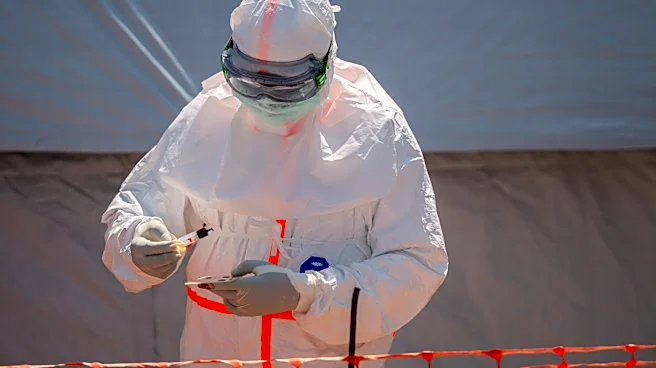
Island Pharmaceuticals, an Australian-headquartered company, has received approval for its antiviral drug, Galidesivir, to be used in Uganda to combat a rare form of Ebola. This approval comes as the country faces its third-largest Ebola outbreak, with
a strain that has a fatality rate of up to 50%. The drug was acquired from Biocryst after Island Pharmaceuticals evaluated numerous molecules, ultimately selecting Galidesivir due to its potential and previous U.S. government investment of $70-$80 million for its development. The drug was initially developed for the Marburg virus, considered a bioterrorism threat. Island Pharmaceuticals' CEO, David Foster, highlighted the drug's potential to fill a market gap and its previous clinical trials as key factors in its selection. The approval for compassionate use allows experimental medicines to be used for life-threatening diseases, and following the announcement, Island Pharmaceuticals' share price surged by over 26%.
Why It's Important?
The approval of Galidesivir for use in Uganda is significant as it addresses a critical need in the fight against a deadly Ebola outbreak. The drug's development and approval highlight the importance of international collaboration and investment in addressing global health crises. The U.S. government's previous investment underscores the strategic importance of developing treatments for potential bioterrorism agents. For Island Pharmaceuticals, this approval not only represents a commercial opportunity but also positions the company as a key player in the global pharmaceutical industry. The rise in the company's share price reflects investor confidence in its potential impact. Additionally, the approval of Galidesivir alongside drugs from American companies like Gilead Sciences and Mapp Biopharmaceutical demonstrates the ongoing efforts to provide effective treatments for Ebola, potentially saving countless lives.
What's Next?
With the approval of Galidesivir for compassionate use, Island Pharmaceuticals is likely to continue its efforts to expand the drug's availability and explore further clinical trials to solidify its efficacy and safety profile. The company may also seek additional approvals in other regions affected by Ebola. The success of Galidesivir could lead to increased interest and investment in similar antiviral treatments, potentially accelerating the development of new drugs for other infectious diseases. Stakeholders, including governments and health organizations, will likely monitor the drug's impact closely, which could influence future funding and policy decisions related to global health security and bioterrorism preparedness.