







What's Happening?
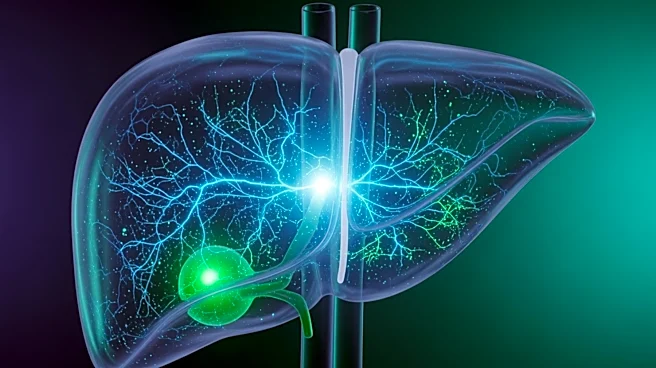
Scientists from the Weizmann Institute of Science, in collaboration with Sheba Medical Center and the Mayo Clinic, have created a detailed genetic atlas of the healthy human liver. Published in Nature, the study reveals a complex division of labor within
the liver, identifying eight distinct regions with specific functions. This new understanding shows how certain areas of the liver are more susceptible to diseases like fatty liver disease. The research utilized advanced genetic mapping techniques and samples from healthy liver donors, providing unprecedented insights into liver function and disease vulnerability.
Why It's Important?
This breakthrough offers a new perspective on liver function, challenging previous notions of the liver as a uniform organ. The genetic atlas could revolutionize the approach to liver disease treatment, allowing for targeted therapies based on specific genetic vulnerabilities. The findings have significant implications for understanding metabolic diseases, liver cancer, and other conditions. By providing a detailed map of liver function, the research sets a foundation for future studies and drug development, potentially leading to more effective treatments for liver-related diseases.
Beyond the Headlines
The study highlights the importance of using healthy human samples for accurate scientific research, as previous studies relied on samples from diseased or compromised livers. The genetic atlas not only aids in understanding liver diseases but also serves as a model for mapping other organs. This approach could fundamentally change the way scientists study human biology, offering a more precise understanding of organ function and disease mechanisms. The research also underscores the potential for personalized medicine, where treatments are tailored to an individual's genetic makeup.