


What's Happening?
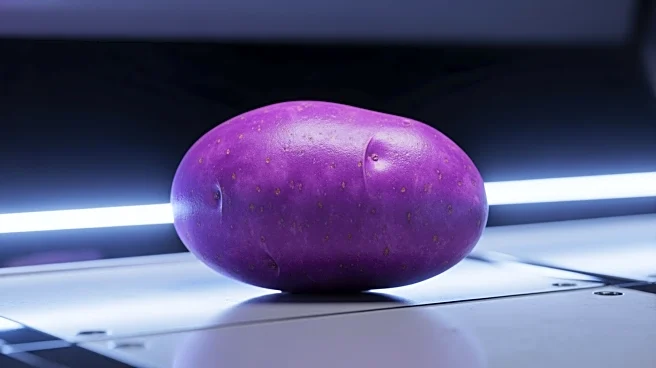
NASA astronaut Don Pettit has shared a photo of a purple potato grown aboard the International Space Station (ISS), sparking interest in space agriculture. The potato, humorously named 'Spudnik-1', was part of Pettit's personal space garden project during
Expedition 72. The unusual color of the potato is attributed to high levels of anthocyanins. Pettit highlighted the efficiency of potatoes as a food source in space, referencing their potential role in future space exploration missions. This initiative aligns with broader efforts by space agencies to develop sustainable food production methods for long-duration missions and potential settlements on Mars and the Moon.
Why It's Important?
The ability to grow food in space is crucial for the success of long-term space missions and the establishment of extraterrestrial colonies. As missions to Mars and the Moon become more feasible, developing reliable and efficient food sources is essential to reduce dependency on Earth-supplied provisions. Pettit's experiment contributes to ongoing research by NASA and other space agencies into space agriculture, which includes growing various crops and developing bioregenerative systems. These advancements could significantly impact future space exploration, making it more sustainable and self-sufficient.
Beyond the Headlines
The experiment also highlights the potential for space agriculture to influence Earth-based agricultural practices. Techniques developed for growing food in space, such as hydroponics and bioreactors, could be adapted to improve food production efficiency and sustainability on Earth. Additionally, the public interest generated by such experiments can inspire future generations to pursue careers in science and technology, further advancing space exploration and agricultural innovation.