


What's Happening?
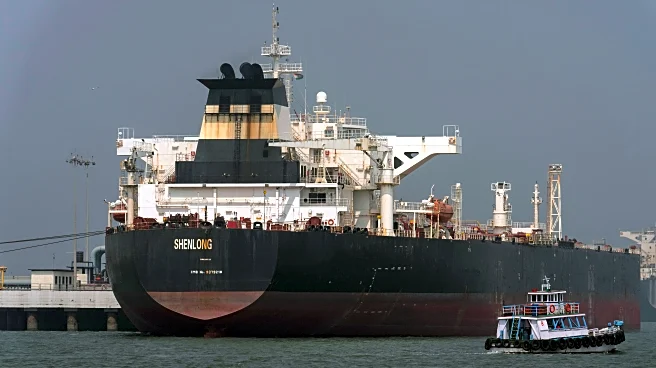
A Swedish court has detained the Russian captain of a tanker, Sea Owl I, suspected of sailing under a false flag. The vessel was boarded by Swedish forces, leading to an investigation into its seaworthiness and the legitimacy of its documentation. The captain,
a 55-year-old Russian citizen, faces charges of using falsified documents. The tanker, built in 2007 and operating under the Camaros flag since 2025, is owned by a corporation in the Marshall Islands. It has been involved in transporting oil products between Russia and Brazil and was sanctioned by the European Union and the UK for its role in the Russian oil trade. The Swedish Transport Agency found several deficiencies in the vessel, imposing a detention order until these issues are resolved. The Russian embassy has confirmed contact with the crew, which includes 10 Russians and 14 Indonesians.
Why It's Important?
This incident highlights ongoing tensions and regulatory challenges in international maritime operations, particularly concerning vessels linked to sanctioned countries like Russia. The detention of the Sea Owl I underscores the enforcement of international sanctions and maritime laws, aiming to curb illegal activities such as false flag operations. This action by Sweden may influence other nations to increase scrutiny on vessels suspected of similar violations, potentially affecting global shipping routes and oil trade dynamics. The case also reflects the broader geopolitical tensions involving Russia, impacting international relations and trade policies.
What's Next?
The Swedish authorities are expected to continue their investigation into the ownership and operations of the Sea Owl I. The vessel's detention could last several weeks, depending on the resolution of the legal and regulatory issues identified. The outcome of this case may prompt further actions against other vessels suspected of similar violations. Additionally, the international community, including the European Union and the United States, may monitor the situation closely, potentially leading to more stringent enforcement of maritime laws and sanctions.