







What's Happening?
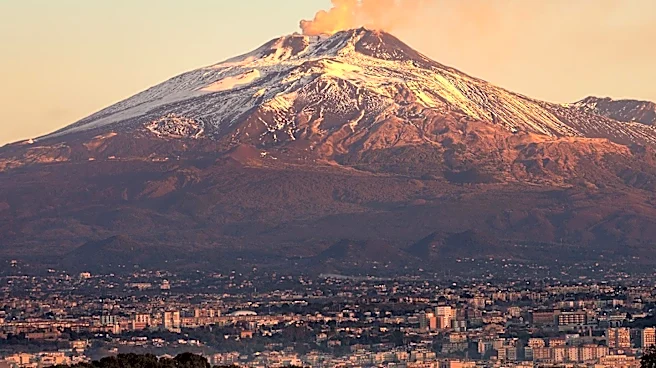
Mount Etna, one of Europe's largest active volcanoes located in Sicily, erupted, causing significant disruptions at Catania-Fontanarossa Airport. The eruption began with ash emissions from the volcano's eastern slope, intensifying to create an ash cloud
approximately 1.5 kilometers high. This volcanic activity prompted a red alert due to the potential hazard the ash cloud poses to aircraft. As a result, incoming flights to Catania Airport have been suspended, and several flights have been diverted to Palermo. ITA Airways, Italy's leading airline, announced that all departing and arriving flights are subject to cancellation or rescheduling. Passengers are advised to check their flight status before heading to the airport.
Why It's Important?
The eruption of Mount Etna and the subsequent flight cancellations highlight the significant impact natural events can have on air travel and local economies. Catania Airport is a crucial hub for both domestic and international flights, and its temporary closure affects not only passengers but also the airline industry and local businesses reliant on tourism. The disruption underscores the vulnerability of air travel to natural phenomena and the importance of having contingency plans in place. The situation also serves as a reminder of the ongoing challenges faced by regions located near active volcanoes, where eruptions can occur with little warning, affecting daily life and economic activities.
What's Next?
The immediate focus will be on monitoring the volcanic activity and ensuring the safety of air travel. Authorities will likely continue to assess the situation and provide updates on the status of the airport and flight operations. Airlines and passengers will need to remain flexible as the situation develops. In the longer term, there may be discussions on improving early warning systems and emergency response plans to better handle such natural disruptions in the future.